Every winter I watch the same thing happen. A rental car sits in a snowbank off the Ring Road, hazard lights blinking, and a very cold couple stands next to it looking at their phone. Almost always the road was fine that morning. What changed was the wind, or the light, or a patch of ice nobody saw.
Driving in Iceland in winter is absolutely doable. Locals do it every day. But it is a different job from summer driving, and the things that catch visitors out are rarely the ones they worry about. This guide covers tyres and the law, whether you need a 4×4, the wind, ice, closed roads and mountain passes, how little daylight you actually get, and the morning routine that keeps you out of trouble.
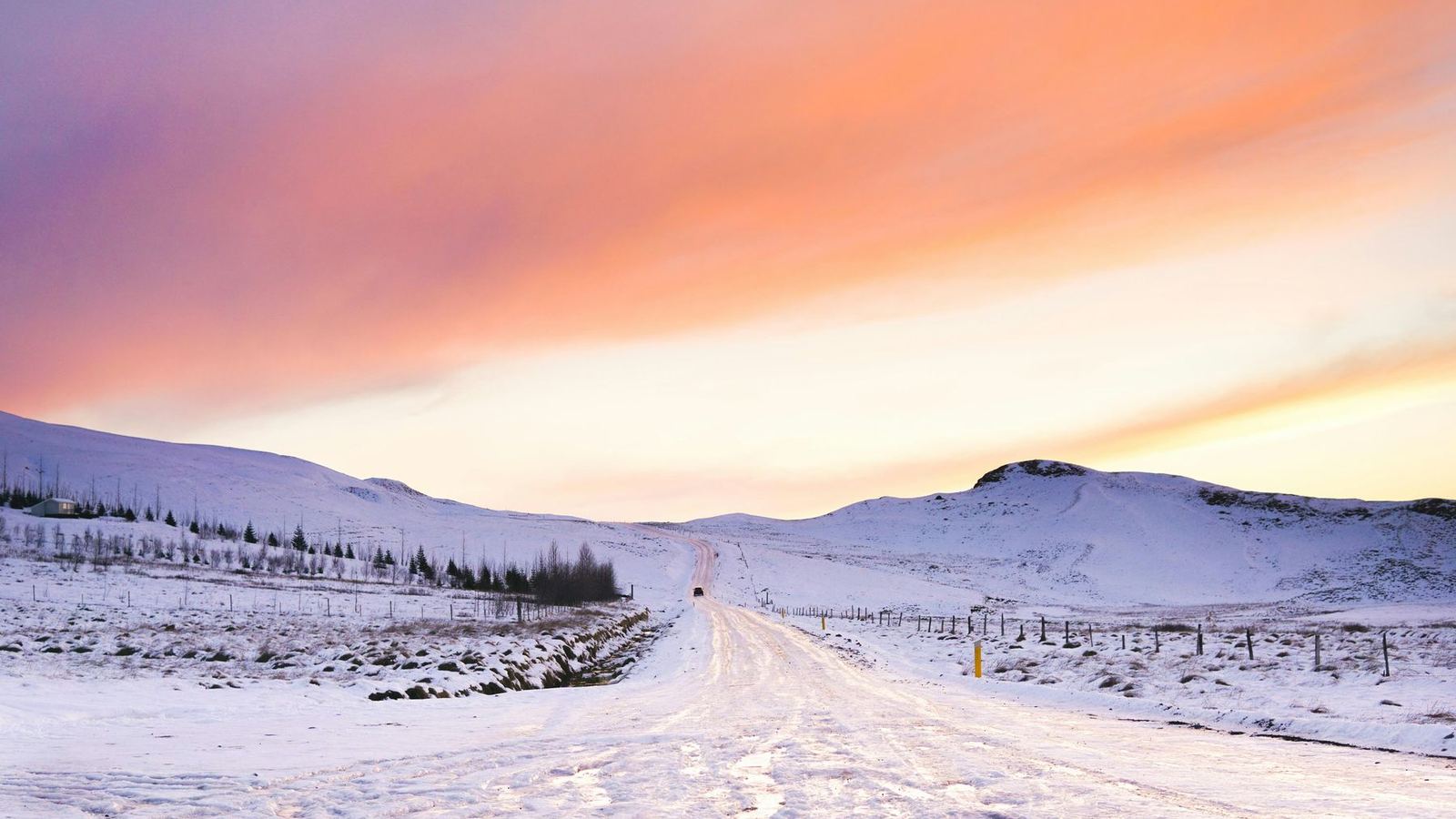
Check umferdin.is and vedur.is every morning before you leave. Drive in daylight, keep well under the speed limit on ice, and never drive past a closed-road sign. Wind is the thing that wrecks cars and trips. If there's an orange or red warning where you're going, stay put for a day. Build at least one spare day into any winter itinerary.
Should You Drive in Iceland in Winter?
Yes, if you're reasonably confident on slippery roads, you're flexible about your route, and you're happy to stay an extra night somewhere when the weather turns. Self-driving gives you the Northern Lights on your own schedule and empty viewpoints that tour buses never stop at.
Probably not, if you've never driven on snow or ice, your trip has no spare days, or you need to reach Keflavík for a flight on a fixed day from far away. In that case base yourself in Reykjavík and use day tours, or keep your self-drive to the Golden Circle and South Coast. See the Iceland in winter guide for what the season is like beyond the roads.
Tyres: What the Law Says and What You'll Get
Icelandic rules say your tyres have to suit the conditions. In practice, that means winter tyres from early November until spring. From 1 November to 14 April the minimum tread depth goes up to 3 mm, and that's also the window when studded tyres are allowed. Outside those dates studs are only permitted if conditions actually call for them.
If you rent, you don't need to arrange this yourself. Winter rental cars come on winter tyres, either studded (metal studs, best on ice) or non-studded friction tyres (soft rubber, good on snow, quieter). Both are legal. If you're heading north or east, it's worth asking for studs when you book.
Rental companies don't supply chains and you won't need them on open roads. If a road is bad enough to need chains, it's bad enough to be closed.
2WD or 4×4?
A 4×4 helps you get moving in loose snow and up icy slopes. It does not help you stop, and it does nothing against wind. A lot of winter accidents involve a confident driver in a big 4×4 going too fast on ice.
| Where you're going | 2WD with winter tyres | 4×4 |
|---|---|---|
| Reykjavík and Reykjanes | Fine | Not needed |
| Golden Circle | Fine on most days | Nice after fresh snow |
| South Coast to Vík and Jökulsárlón | OK on most days | Recommended |
| Snæfellsnes | OK in good weather | Recommended |
| North Iceland, Mývatn, East Fjords | Not ideal | Strongly recommended |
| Westfjords | No | Yes, plus real experience |
| F-roads and the highlands | Closed all winter. Not an option in any car. | |
More on choosing a car, insurance and F-roads in the car rental guide.
The Morning Check: Three Sites and One Number
This is the single habit that matters most. Before you start the engine, every single morning:
- umferdin.is: the Road Administration's live map. Roads are colour-coded from easily passable to impassable, with closures marked. It has an English version.
- vedur.is: the Met Office forecast. Look at wind speed and gusts as much as snow. Yellow, orange and red warnings are shown on the map.
- safetravel.is: current alerts for travellers, and you can leave a travel plan there.
- 1777: the road information phone line, open 6:30 to 22:00. Useful when you're not sure if a pass is open yet.
In an emergency, call 112. The 112 Iceland app can also send your location to rescuers.
Yellow doesn't mean "don't drive". It means pay attention: check the timing, the area and the wind speed. Orange means seriously reconsider driving through that area. Red means stay where you are. Warnings are regional, so a yellow in the Southeast doesn't mean anything for Reykjavík.
Wind Is the Real Danger
Visitors worry about snow. Locals worry about wind. Iceland has almost no trees to slow it down, and gusts of 25–35 m/s happen several times every winter. That's enough to push a small car across the road or blow a camper van over.
Some stretches are known for sudden, violent gusts even when the rest of the day is calm: Kjalarnes just north of Reykjavík, Hafnarfjall near Borgarnes, the area under Eyjafjöll and around Vík on the South Coast, and parts of Öræfi near Skaftafell. If vedur.is shows strong gusts there, wait. On the black sand plains of the south, wind also picks up sand and ash that can strip paint and crack windscreens.
The most common winter damage on rental cars isn't a crash. It's a door caught by the wind and bent forwards against its hinges. It happens in a second, it's expensive, and it's often not covered by standard insurance. Park facing into the wind and keep a firm hand on the door every time you open it.
Ice, Snow and Stopping Distance
The worst surface isn't deep snow. It's the thin, clear ice you can't see, which Icelanders call glærahálka. It forms most often in the morning and evening, on bridges, in shaded dips and anywhere wet roads meet a sudden frost. If the road looks wet and shiny but the temperature is around zero, assume it's ice.
- Double, then double again, your normal following distance.
- Brake gently and early. Don't brake hard in a bend.
- Slow right down before single-lane bridges (einbreið brú). They're often icier than the road.
- If the rear starts to slide, ease off the pedals and steer gently where you want to go.
- Don't use cruise control on slippery roads.
The speed limits stay the same in winter (90 km/h on paved roads, 80 on gravel, usually 50 in towns), but they're the maximum, not a target. On ice, 60–70 km/h is often already too fast.
Daylight: Less Than You Think
Around the winter solstice Reykjavík gets roughly four hours of real daylight: sunrise around 11:20, sunset around 15:30. In the north it's even less. In November and February you get about seven to eight hours.
That changes how you plan. A drive that looks like three hours on Google Maps takes longer on winter roads, and doing it in the dark on unlit roads with snow and ice is much harder. Plan the long stretches for the middle of the day, and be at your accommodation by dark when you can. Use the dark hours for Northern Lights. See the Northern Lights guide, and never stop on the road itself to look at them.
Closed Roads and Mountain Passes
Many mountain roads have gates that close in bad weather. A closed road is closed. Driving around a barrier can put you and the rescue teams who come for you in real danger. It also typically voids your rental insurance and can lead to a fine.
The passes that most often close or turn tricky are worth knowing by name, because you'll hear them on the news and see them on umferdin.is:
| Pass | Where | Why it matters |
|---|---|---|
| Hellisheiði and Þrengsli | Reykjavík to Selfoss and the South Coast | The way out of Reykjavík for the Golden Circle and South Coast. Þrengsli is the lower alternative when Hellisheiði closes. |
| Holtavörðuheiði | Ring Road, west to north | Main route between Reykjavík and Akureyri |
| Öxnadalsheiði | Ring Road, just west of Akureyri | Often the last bit to close or open on the way north |
| Möðrudalsöræfi | Ring Road, Mývatn to Egilsstaðir | High, exposed, long stretch with nowhere to stop |
| Fjarðarheiði | Egilsstaðir to Seyðisfjörður | Only road into Seyðisfjörður, frequently closed |
What to Have in the Car
Headlights must be on at all times in Iceland, day and night, all year. On most rental cars that's automatic, but check.
Insurance: Read the Small Print
The basic collision cover (CDW) on most rentals doesn't cover the damage that winter actually causes: wind-bent doors, gravel and sand damage, a windscreen chipped by grit, or anything that happens on a closed road. Gravel protection and sand-and-ash protection exist for a reason. Read what's excluded before you sign, not after. The car rental guide goes through the options.
What Locals Actually Do
- We wait. If there's an orange warning, we don't drive that day. Nobody thinks it's strange to cancel plans because of weather.
- We leave room for a lost day. A winter Ring Road trip needs at least one spare day, preferably two.
- We sleep near the airport before a flight. If you fly out of Keflavík, spend the last night in Reykjavík or Keflavík, not five hours away in the east.
- We don't trust the sky. A clear morning can be a storm by mid-afternoon. Check the forecast for the end of your drive, not just the start.
For the mistakes we see visitors make all year round, see common driving mistakes in Iceland.
The Bottom Line
Winter driving in Iceland isn't about being brave, it's about being patient. Check the forecast and road map every morning, keep your speed down on ice, respect the wind and every closed-road sign, and give your itinerary room to breathe. Do that and you'll have frozen waterfalls, empty roads and Northern Lights mostly to yourself.