An Icelandic Christmas has no Santa sliding down the chimney. Instead there are thirteen scruffy troll brothers who steal sausages and lick spoons, their mother who eats naughty children, and a giant cat that eats anyone who didn't get new clothes. We grew up with these stories, and every December they come back out.
This guide covers the 13 Yule Lads and when each one arrives, Grýla and the Yule Cat, the dates that matter, what we eat, why everyone gives books, what's open over the holidays, and where you can join in as a visitor.
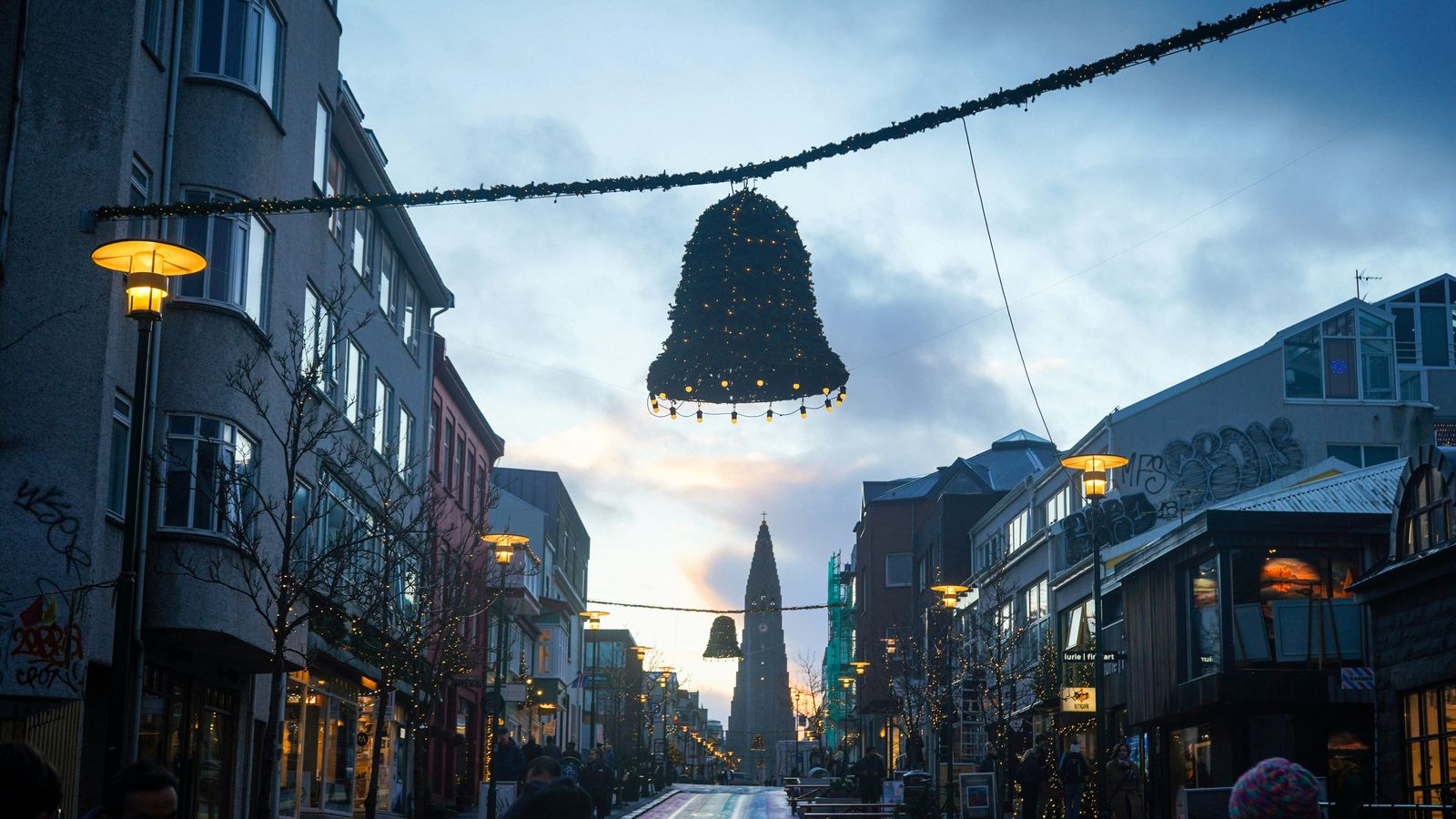
The season runs from Advent to 6 January. The Yule Lads arrive one per night from 12 December, and children leave a shoe in the window for them. The big night is Christmas Eve: at 18:00 the bells ring, families eat dinner and open presents. Christmas Day is quiet and nearly everything is closed. New Year's Eve is loud, with bonfires and more fireworks than you'd think possible.
The 13 Yule Lads
The jólasveinar are thirteen brothers who live in the mountains. In the old folktales they were frightening thieves. Over the last century they've softened into mischievous, gift-giving characters, helped a lot by Jóhannes úr Kötlum's 1932 poem about them, which every Icelandic child still learns.
From 12 December, one Yule Lad comes to town each night. Children put a shoe on the windowsill before bed. A good child finds a small gift or sweets in the morning. A naughty one gets a potato. On Christmas Day the first one heads home, and they leave one a day until the last is gone on 6 January.
| Arrives (night of) | Name | In English | What he's up to |
|---|---|---|---|
| 12 Dec | Stekkjarstaur | Sheep-Cote Clod | Tries to drink milk from the farmer's ewes, but his stiff legs get in the way |
| 13 Dec | Giljagaur | Gully Gawk | Hides in gullies, then sneaks into the cowshed to steal the milk foam |
| 14 Dec | Stúfur | Stubby | The short one. Steals frying pans to eat the burnt bits |
| 15 Dec | Þvörusleikir | Spoon-Licker | Licks the long wooden stirring spoon |
| 16 Dec | Pottaskefill | Pot-Scraper | Scrapes leftovers out of the pots |
| 17 Dec | Askasleikir | Bowl-Licker | Hides under beds and licks the lidded wooden bowls (askar) |
| 18 Dec | Hurðaskellir | Door-Slammer | Slams doors at night to wake everyone up |
| 19 Dec | Skyrgámur | Skyr-Gobbler | Eats all the skyr he can find |
| 20 Dec | Bjúgnakrækir | Sausage-Swiper | Hides in the rafters and steals smoked sausages |
| 21 Dec | Gluggagægir | Window-Peeper | Peeks through windows looking for things to steal |
| 22 Dec | Gáttaþefur | Doorway-Sniffer | Has an enormous nose and follows the smell of baking |
| 23 Dec | Ketkrókur | Meat-Hook | Uses a hook to snatch meat, usually the Christmas lamb |
| 24 Dec | Kertasníkir | Candle-Beggar | Follows children to steal their candles |
Put a shoe in the window of your guesthouse or apartment from 12 December. Many hosts know the drill and play along, and it's a lovely way to make the trip feel local. Just don't leave a potato as a joke on the first night.
Grýla, Leppalúði and the Yule Cat
Grýla is the Yule Lads' mother, a troll who lives in the mountains and comes down at Christmas to collect naughty children for her stew. Her husband Leppalúði is mostly lazy and stays home. For centuries Grýla was used to scare children into behaving, and in the 18th century parents were officially told to stop using her to frighten their kids.
Jólakötturinn, the Yule Cat, is Grýla's pet. It prowls on Christmas Eve and eats anyone who hasn't received a new piece of clothing before Christmas. The story has a practical origin: it pushed farmworkers to finish processing the autumn wool in time, and new clothes were their reward. That's why a pair of socks is still a perfectly respectable Icelandic Christmas present.
Since 2018 Reykjavík has put up a huge Yule Cat made of lights on Lækjartorg square, about 5 metres tall and 6 metres wide, with 6,500 LEDs (Reykjavík city). It's lit in mid-November and is the most photographed Christmas thing in town.
The Dates That Matter
| Date | Icelandic name | What happens |
|---|---|---|
| Four Sundays before Christmas | Aðventa | Advent. Lights go up, Advent candles are lit each Sunday, Christmas markets open |
| 12 Dec | – | First Yule Lad arrives. Shoes go in windows |
| 23 Dec | Þorláksmessa | St Þorlákur's Day. Fermented skate for lunch, last-minute shopping on Laugavegur in the evening |
| 24 Dec | Aðfangadagur | Christmas Eve, the main event. Shops close early afternoon. At 18:00 bells ring, dinner, presents |
| 25 Dec | Jóladagur | Quiet family day, big lunch of hangikjöt. Almost everything closed |
| 26 Dec | Annar í jólum | Second Christmas day. Public holiday, some shops reopen |
| 31 Dec | Gamlárskvöld | New Year's Eve: bonfires, the TV comedy special Áramótaskaupið, then fireworks at midnight |
| 6 Jan | Þrettándinn | Thirteenth day of Christmas. Last Yule Lad leaves, bonfires and elf dances |
On 23 December many Icelanders eat kæst skata, fermented skate. It smells strongly of ammonia, and the smell sticks to your clothes and hair. Try it if you're brave, but maybe not in your nice jacket.
What We Eat
- Hangikjöt: smoked lamb, served cold or warm with potatoes in white sauce, green peas and red cabbage. The classic Christmas Day meal.
- Hamborgarhryggur: glazed smoked pork loin, the most common Christmas Eve dinner in many homes.
- Rjúpa: ptarmigan, the traditional Christmas Eve game bird for families who hunt.
- Laufabrauð: "leaf bread", thin fried rounds cut into lacy patterns. Families get together in Advent to cut and fry them.
- Smákökur: Christmas cookies. Most families bake several kinds, and the competition is real.
- Malt og appelsín: a mix of malt drink and orange soda. Ask any Icelander, it tastes like Christmas.
For more on Icelandic food, see the food guide.
Jólabókaflóð: The Christmas Book Flood
Most new Icelandic books are published in the autumn, in time for Christmas. Every household gets a catalogue of new titles, and books are the most common Christmas present. The ideal Christmas Eve, for a lot of us, ends in bed with a new book and a box of chocolates. If you want a souvenir that locals will respect, an Icelandic book in English translation is a good one.
Where Visitors Can Join In
| Where | What | Practical |
|---|---|---|
| Lækjartorg, Reykjavík | The giant Yule Cat light installation | Free, from mid-November |
| Laugavegur, Reykjavík | Christmas lights, shops open late, very busy on the evening of 23 Dec | Free |
| Árbæjarsafn, Reykjavík | Open-air museum with old-style Christmas: laufabrauð, candle-making and Yule Lads | Sundays in Advent; check dates |
| Dimmuborgir, Mývatn | Meet the Yule Lads in the lava fields where they "live" | 1–23 Dec, 2,300 ISK for age 6+ (North Iceland) |
| Jólagarðurinn, near Akureyri | A Christmas house and shop open all year | About 10 minutes' drive south of Akureyri |
| Any town, 31 Dec and 6 Jan | Community bonfires (brennur) and fireworks | Listed by each town in late December |
What's Open Over Christmas
Plan for Christmas Eve afternoon and Christmas Day as the two days when the country basically shuts down. Most shops close around 14:00–16:00 on 24 December, and on 25 December the big supermarket chains are closed. Hagkaup in Skeifan and Garðabær are usually the best bets around the holidays, but hours change every year (2025/26 overview).
- Buy groceries on 23 December at the latest.
- Book Christmas Eve and Christmas Day dinners weeks ahead. Many restaurants close, and hotel restaurants fill up.
- Many tours run as usual, including Northern Lights and Golden Circle trips, but check the operator's holiday schedule.
- Fill the car and check umferdin.is before any holiday drive. See the winter driving guide.
The Bottom Line
Christmas in Iceland is dark, cosy and a little bit strange, and that's the charm of it. Go see the Yule Cat on Lækjartorg, put a shoe in the window, try malt og appelsín, and book your Christmas dinner early. If you're here on New Year's Eve, find a bonfire, then go somewhere high at midnight and watch the whole city light up.