On August 12, 2026, a total solar eclipse will cross Iceland. This is a full total eclipse for parts of western Iceland. The path of totality crosses the Westfjords, Snæfellsnes, Reykjavík, and the Reykjanes Peninsula.
Many travelers are already aiming for the Westfjords, especially the Látrabjarg area, because totality lasts longer there. That makes sense, but it also creates a problem: accommodation in the Westfjords is limited, and some places may already be booked or very expensive. The good news is that the eclipse will also be visible from other parts of western Iceland.
The Westfjords may offer some of the longest totality in Iceland, but they are not the only place to see the eclipse. Reykjavík, Reykjanes, and Snæfellsnes are also inside the path of totality, and they may be more practical for many visitors.
Be inside the path of totality. Book sleep and transport before chasing the longest duration. Bring certified eclipse glasses and keep eclipse day flexible for weather.
Why This Eclipse Is a Big Deal
Total solar eclipses are rare from any one place on Earth. For travelers, the August 12, 2026 eclipse is especially interesting because the path crosses accessible parts of Iceland during peak travel season. That means visitors can combine the eclipse with a normal Iceland itinerary instead of traveling to a remote wilderness just for a few minutes of sky.
The timing also makes it unusual. The eclipse happens in the late afternoon in Iceland, when many travelers will already be out on road trips, tours, or day drives. That creates opportunities, but also pressure. Roads, viewpoints, hotels, rental cars, campsites, restaurants, and tours in western Iceland may be busier than a normal August day.
In Iceland, the eclipse is as much a travel planning problem as an astronomy event. The people who enjoy it most will not necessarily be the people who find the mathematically longest totality. They will be the people who have a realistic plan, a place to sleep, safe viewing glasses, and enough flexibility to respond to Icelandic weather.
What Totality Actually Means
A total solar eclipse happens when the Moon completely covers the Sun from your viewing location. During the partial phases, the Sun is only partly covered and you must use proper eclipse glasses. During totality, daylight drops dramatically, the sky changes color, the temperature can feel different, and the Sun's outer atmosphere may be visible around the Moon.
The important detail is that totality only happens inside a narrow path. If you are outside that path, even by a small distance, you may see a very deep partial eclipse but not the full effect. For many people, that difference is huge. A 99% partial eclipse is still not the same experience as totality.
That is why location matters. You do not need to be at the absolute center of the path, but you do need to be inside the path of totality if your goal is to experience the full eclipse.
Eclipse Timing in Iceland
Times vary by exact location. In Reykjavík, the partial eclipse begins in the late afternoon, totality happens around 5:48 PM, and the partial eclipse ends before 7:00 PM. Iceland uses GMT year-round, so these are local Iceland times.
Timing based on published eclipse circumstances from Eclipse2026.is and timeanddate.com. Always check final local timings for your exact viewing location before the day.
Where the Path Crosses Iceland
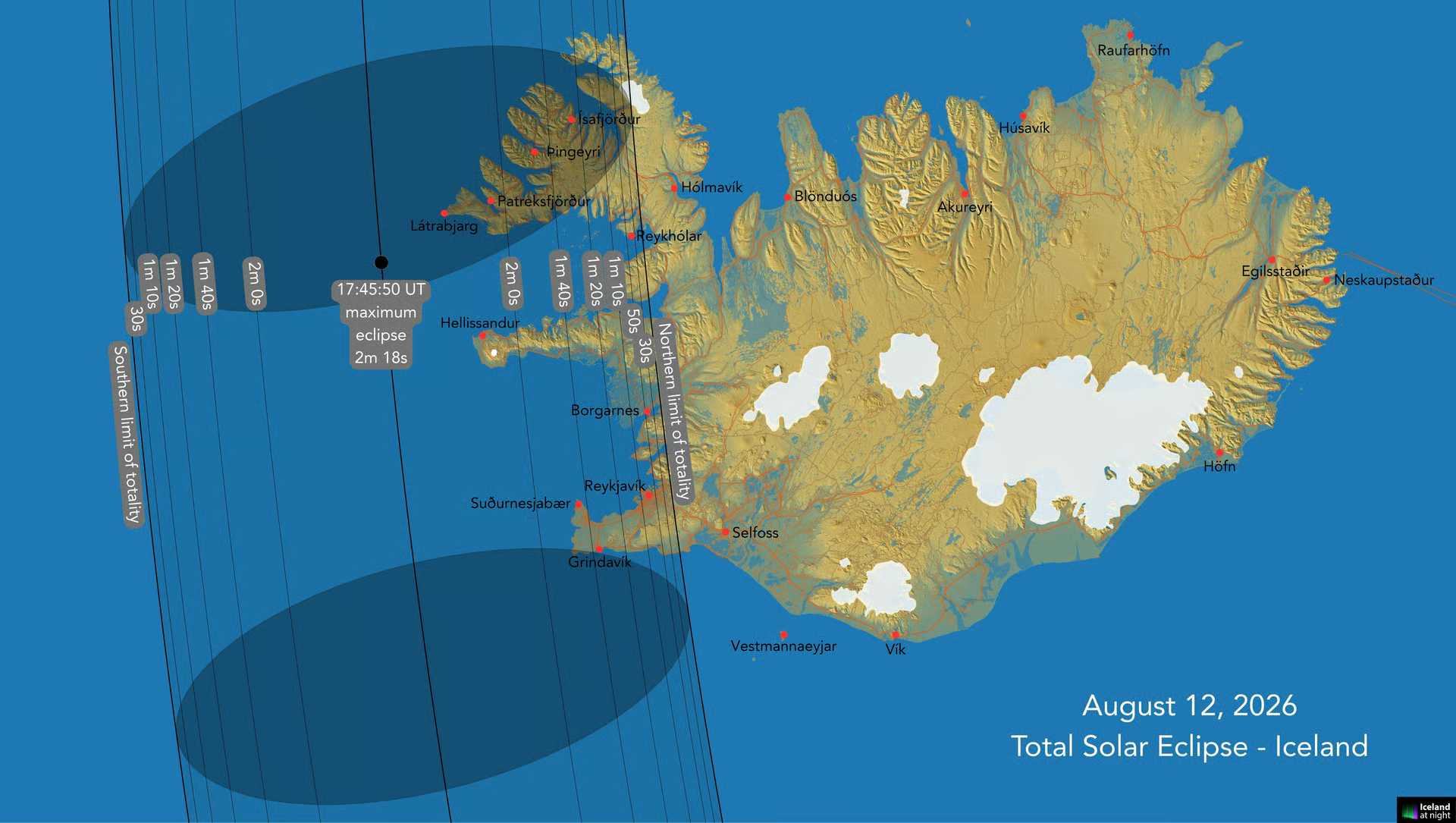
The path of totality crosses western Iceland. It reaches land in the far northwest, moves across parts of the Westfjords, crosses Snæfellsnes, includes the capital area, and continues across Reykjanes before leaving Iceland over the Atlantic.
The map above is the planning anchor. Use it first, then choose a base that matches your risk tolerance, not only the longest possible duration.
This is the key point for travelers: the Westfjords are not the only valid plan. They may be one of the most exciting plans, especially for eclipse duration and wild scenery, but they are also the most logistically fragile. Reykjavík and Reykjanes are easier. Snæfellsnes sits in the middle: scenic, dramatic, and more practical than the far Westfjords, but still with limited accommodation.
If you are building an Iceland itinerary around the eclipse, start with this question: do you want the longest possible totality, the easiest logistics, or the best balance between landscape and practicality? Those are three different trips.
Where to Watch the Eclipse
The best place is not automatically the place with the longest totality. In Iceland, clouds, accommodation, road access, parking, and crowding matter just as much. A clear view from a practical location beats a theoretically perfect location under cloud or with nowhere to stay.
Látrabjarg is likely to be one of the headline locations because it combines long totality, dramatic cliffs, and a true edge-of-Iceland feeling. But it is not a simple place to use as a base. The roads take time, services are limited, and if weather changes, you do not have endless fast options in every direction.
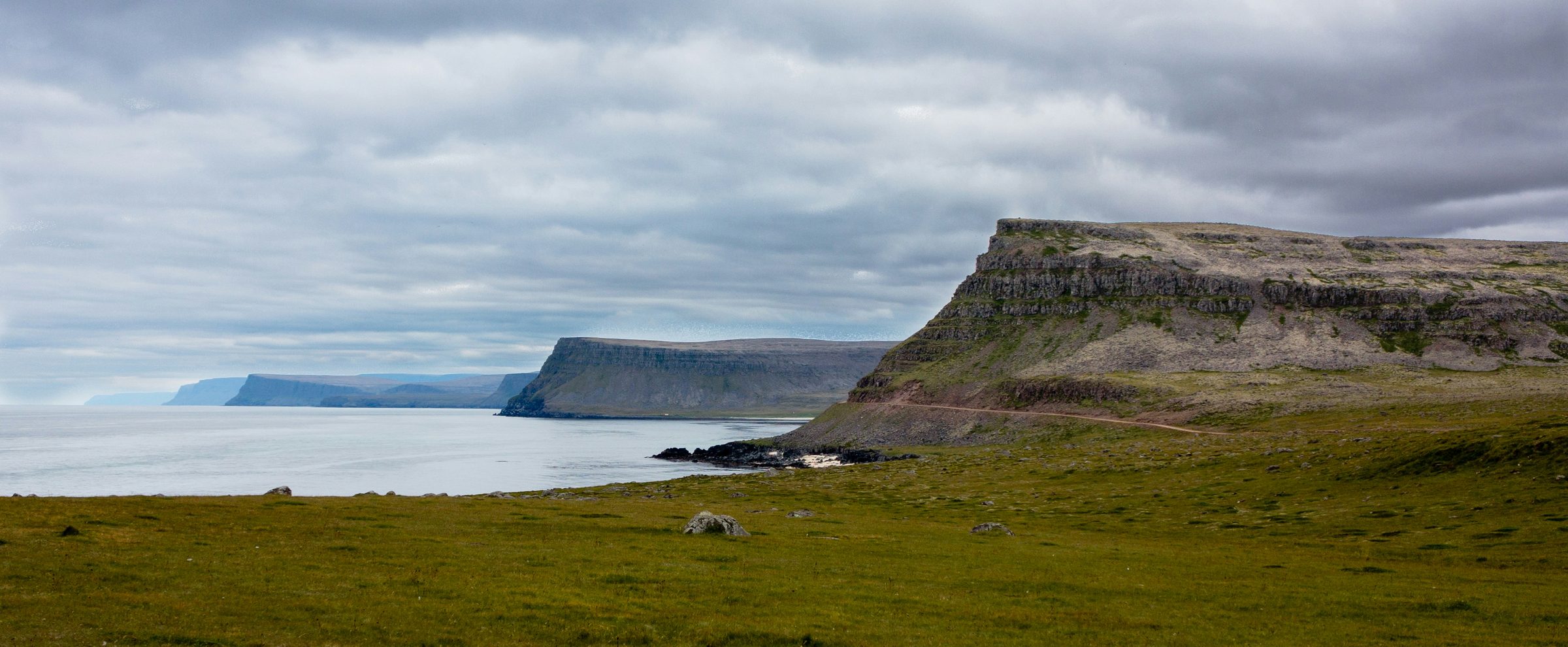
For photographers and experienced eclipse chasers, that may be part of the appeal. For families, first-time Iceland visitors, or anyone nervous about remote roads, it may be too much stress for a short event.
Snæfellsnes is probably the best middle-ground choice for many travelers. You get mountains, lava fields, beaches, fishing villages, and open coastal viewpoints. You can also connect it with Borgarnes or Reykjavík more easily than the far Westfjords.
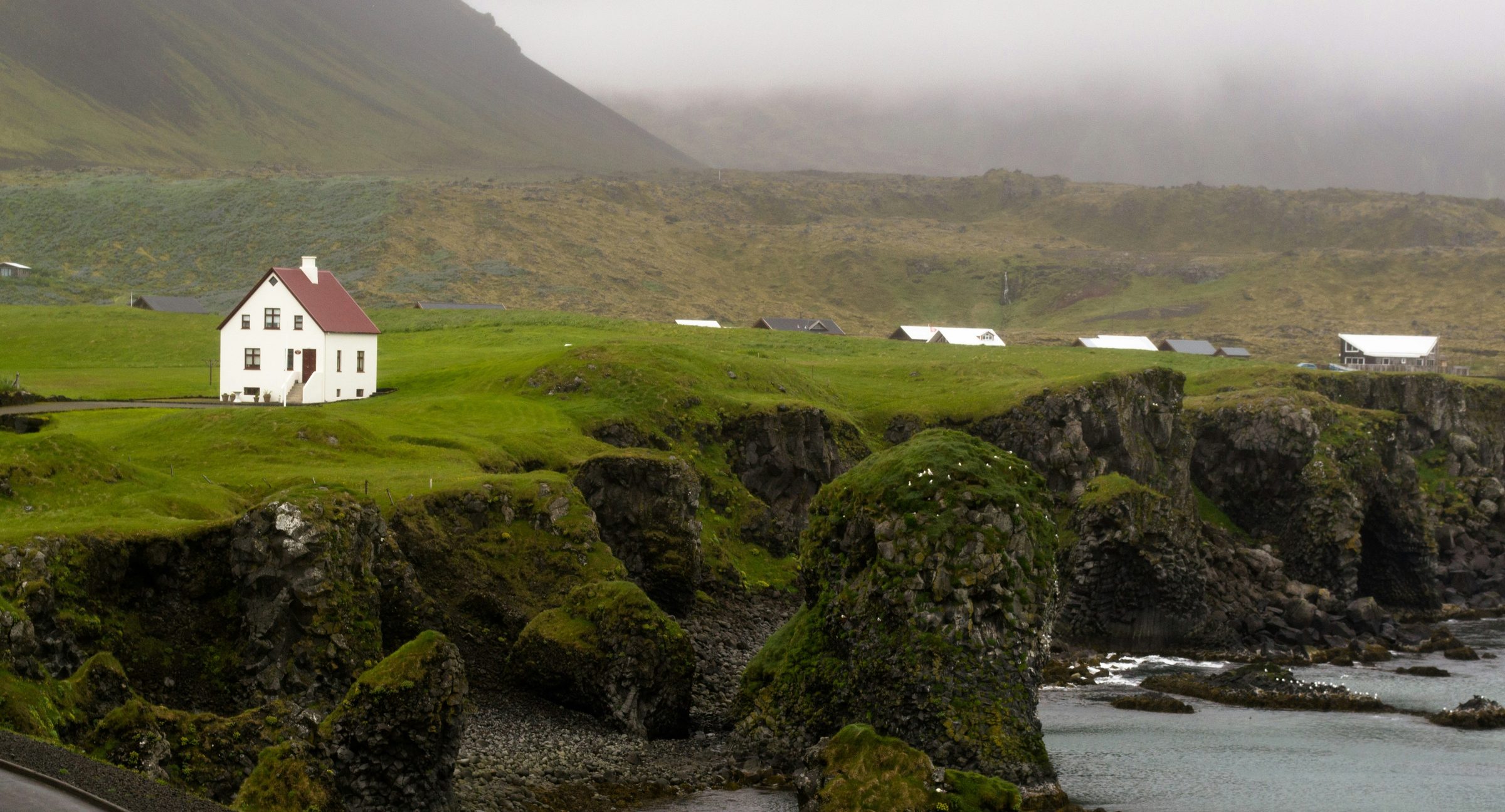
The downside is accommodation. Snæfellsnes is already popular in summer, and eclipse demand will make it tighter. If you want to sleep on the peninsula, especially near Grundarfjörður, Arnarstapi, Hellnar, or Stykkishólmur, book as early as you can.
Reykjavík will not give the longest show, but it may give the least stressful one. You can stay in the city, walk or drive to an open viewing location, eat normally, and avoid turning the whole trip into a remote-road operation.
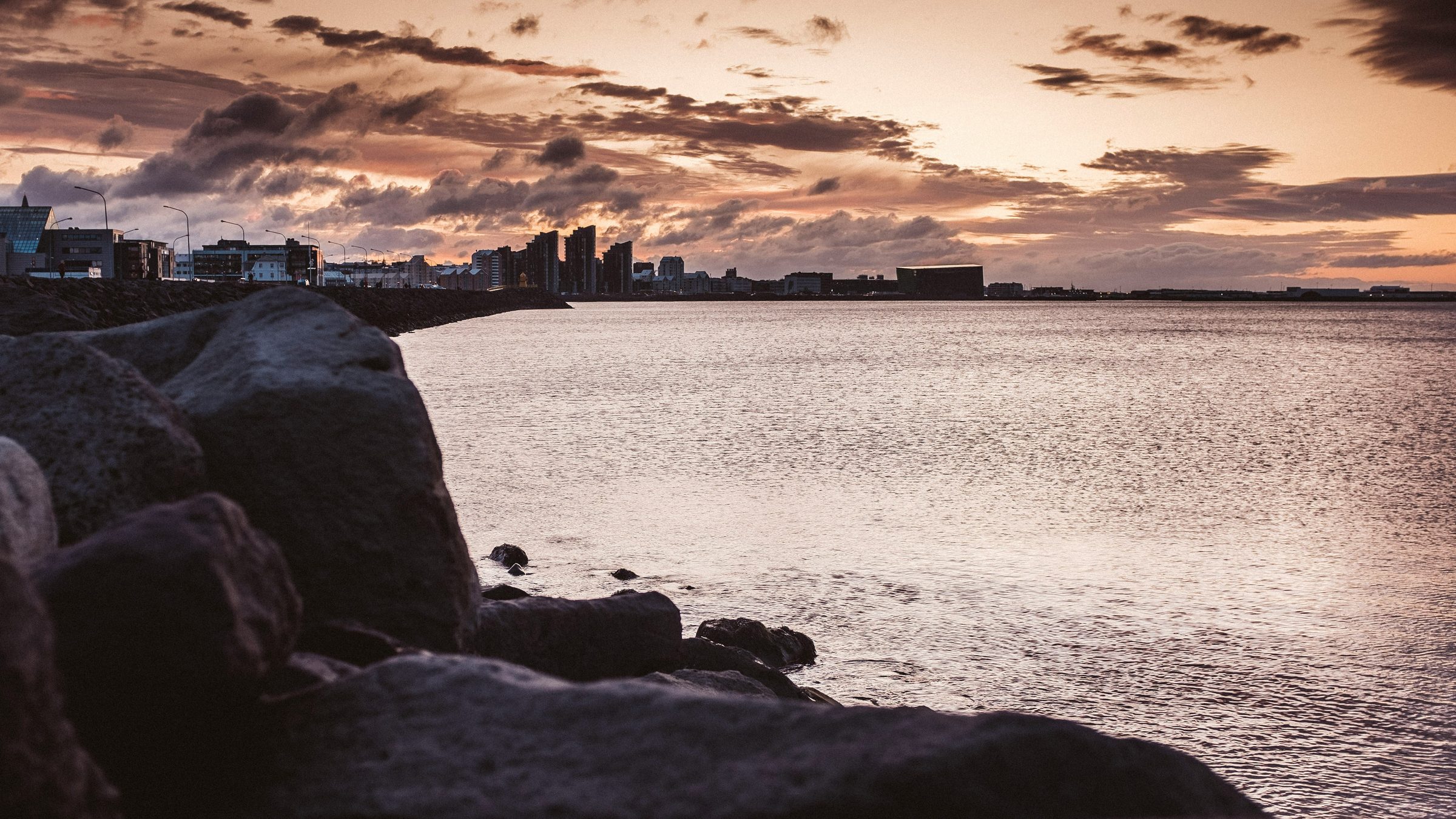
This matters more than people think. A total eclipse is short. If your plan depends on a long drive, limited parking, no backup food, no bathroom, and a hard-to-find guesthouse, the experience can get tense quickly. Reykjavík gives up some duration but gains simplicity.
Reykjanes is especially useful for short trips. If someone is flying in for the eclipse and only has two or three nights, staying near Keflavík, Reykjavík, or the Blue Lagoon area can make sense. The peninsula has open coastal landscapes, dark lava fields, and fewer long fjord roads than the Westfjords.
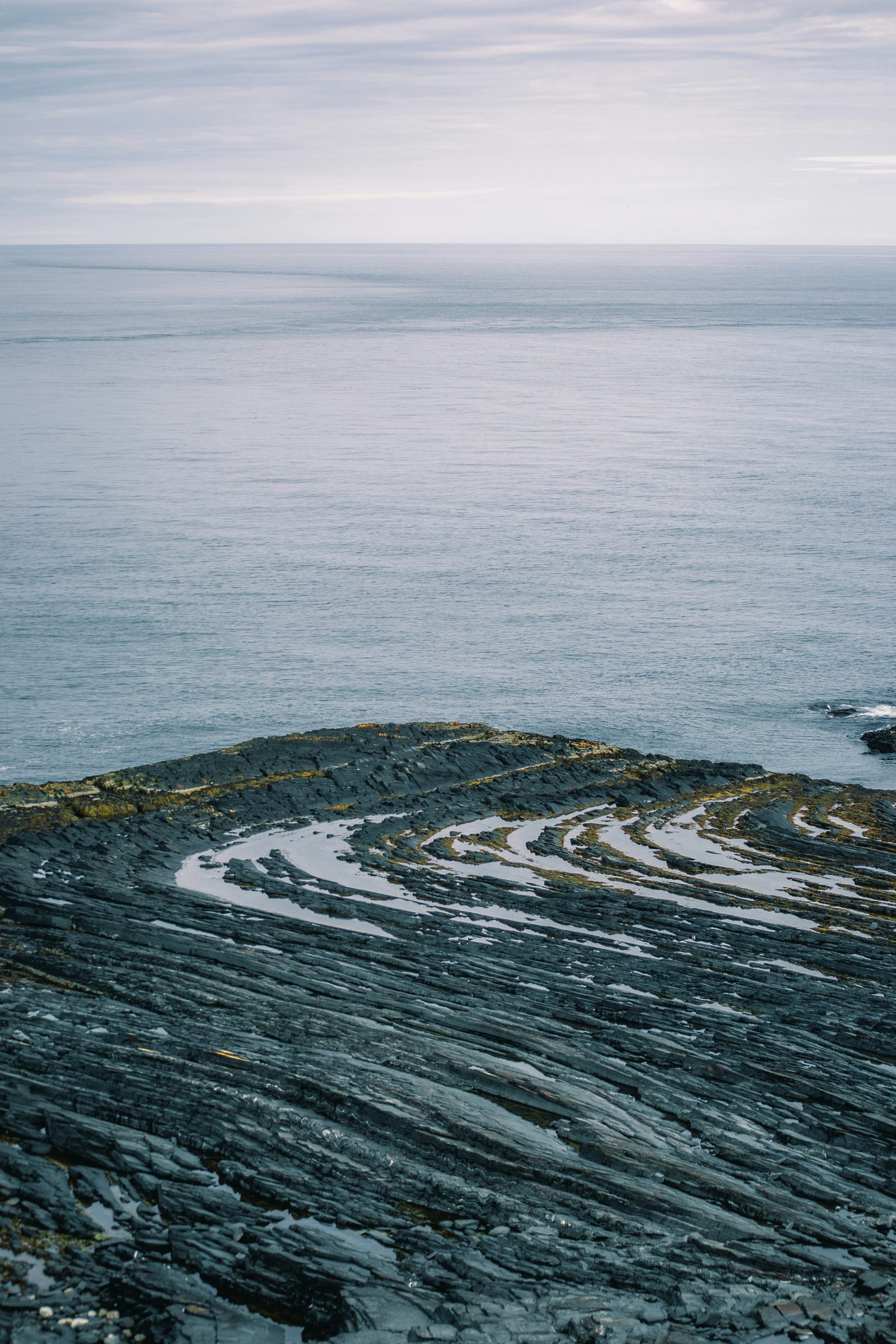
The main caution is volcanic activity and local closures, which can affect parts of Reykjanes. Travelers should check local conditions before choosing a specific viewing spot.
Everyone Wants the Westfjords
It is easy to understand why people are aiming west. The eclipse path reaches Iceland through the Westfjords, and the longest totality in or near Iceland is around the far western edge. For eclipse chasers, that is a natural target.
But there is a practical problem: the Westfjords do not have endless hotel rooms. Small towns like Patreksfjörður, Breiðavík, Bíldudalur, and Ísafjörður can fill quickly during normal summer peaks, and the eclipse adds unusual pressure. If you have not booked yet, be prepared for limited options.
That does not mean the trip is ruined. It means you should widen the search. Snæfellsnes, Reykjavík, Borgarnes, Akranes, Keflavík, and other western locations may still put you in or near the path with better logistics.
First check Snæfellsnes and Borgarnes. Then Reykjavík, Akranes, Reykjanes and Keflavík. After that, look for any western base with legal parking, food nearby, and more than one road option on eclipse day.
This is the angle many visitors miss. They hear “Látrabjarg has longer totality” and assume anything else is second best. But travel is not a spreadsheet. If the Westfjords are fully booked, extremely expensive, or too complicated, a well-planned Reykjavík or Snæfellsnes eclipse day may be much better than forcing a difficult Westfjords plan.
The worst plan is not “watching from Reykjavík.” The worst plan is arriving in western Iceland with no accommodation, no rental car, no eclipse glasses, no weather backup, and the expectation that everything will somehow work itself out.
Where to Stay
Best for longest totality: Westfjords, especially the Látrabjarg and Patreksfjörður side, if you can find accommodation.
Best balance: Snæfellsnes or Borgarnes. You can still aim west while keeping more route flexibility.
Best logistics: Reykjavík. Shorter totality, but far easier for accommodation, food, transport, tours, and backup plans.
Best airport access: Reykjanes or Keflavík. Useful if your trip is built around the eclipse and a short stay.
Do not assume you can arrive in western Iceland and find a room on the day. Hotels, guesthouses, campervans, rental cars, restaurants, tours, and even campsites may be under pressure around the eclipse.
Accommodation Strategy if Places Are Sold Out
If the exact place you want is already booked, widen the search in rings rather than giving up. For the Westfjords, look beyond Látrabjarg itself: Patreksfjörður, Tálknafjörður, Bíldudalur, Breiðavík, Flókalundur, Ísafjörður, and smaller guesthouses may all be relevant depending on your route.
For Snæfellsnes, search both the peninsula and nearby mainland towns. Grundarfjörður and Stykkishólmur are obvious, but Borgarnes, Akranes, and even Reykjavík can still work if you are willing to drive. For Reykjanes, include Keflavík, Njarðvík, Vogar, Grindavík if accessible, and Reykjavík.
Campervans may look like an easy solution, but they will also be in demand. You still need legal places to stay overnight, and campsites can become busy. Iceland is strict about where you can camp or sleep in a vehicle, so do not build a plan around parking anywhere you like.
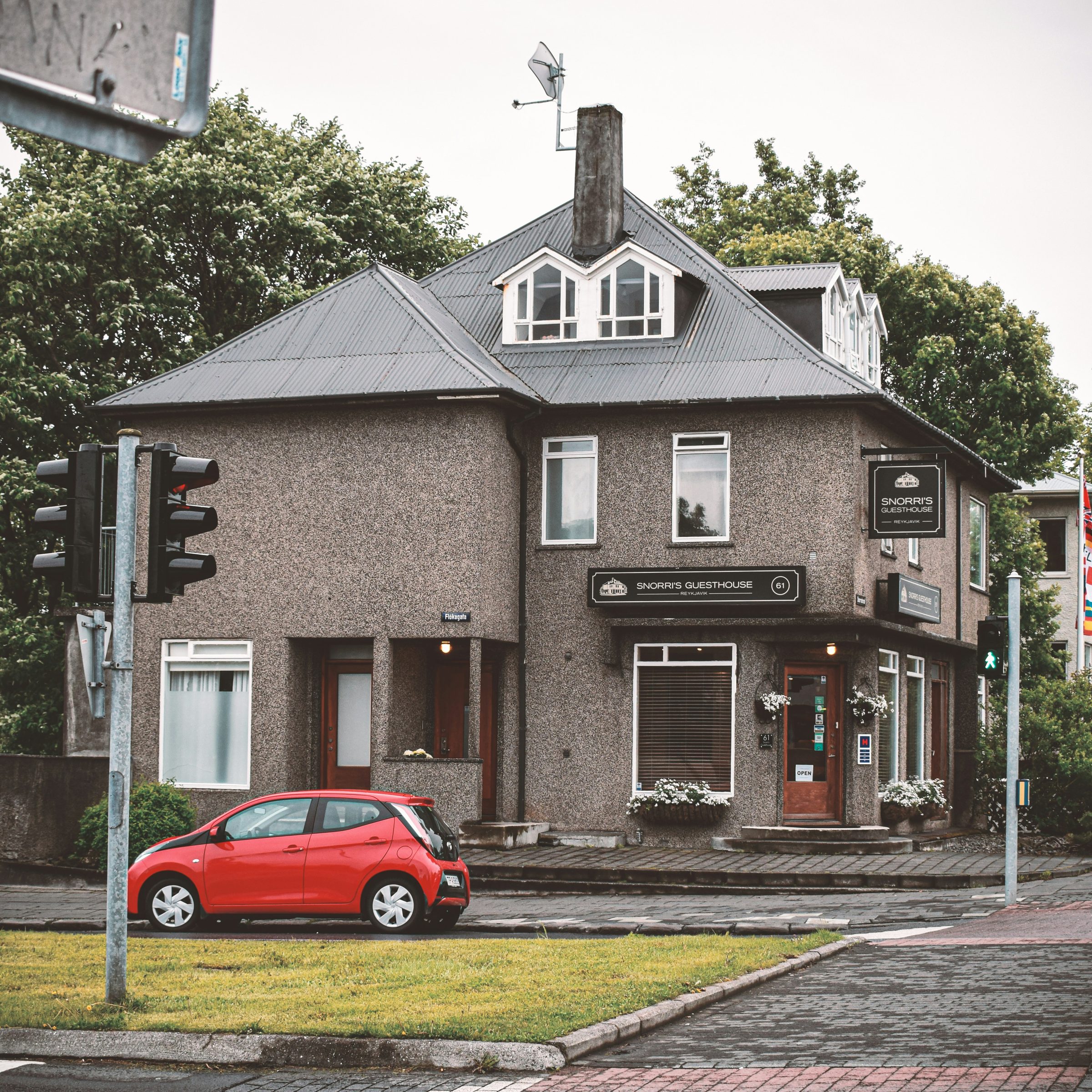
If you are booking late, prioritize flexibility: refundable rooms, a rental car, and a base with multiple road options. That may beat the “perfect” location with no backup plan.
What to Book First
Accommodation: This is the bottleneck. Book it before polishing the rest of the itinerary.
Rental car or campervan: Western Iceland needs mobility, especially if clouds force a last-minute change of viewpoint.
Eclipse glasses: Buy certified eclipse glasses before the trip. Do not assume they will be easy to find in Iceland right before the event.
Restaurants or food plan: In small towns, restaurants may be fully booked or overwhelmed. Carry snacks, water, and simple backup meals.
Tours and activities: If you want to combine the eclipse with a specific tour, book early. But do not overfill eclipse day itself. The sky is the main event.
Weather and Clouds
Cloud is the uncomfortable truth of eclipse planning in Iceland. August is one of the better travel months, but Icelandic weather can still change quickly. A perfect location on paper does not help if the sky is covered.
If you can, build flexibility into your plan. Staying somewhere with road options in multiple directions may be smarter than locking yourself into a single remote viewpoint. Check the cloud forecast repeatedly in the days before the eclipse and be ready to move within reason.
Do not overreact to every forecast change a week out. Icelandic cloud forecasts can shift. The useful window is usually the final days and hours, when you can compare forecasts, satellite imagery, and local conditions. Even then, there are no guarantees.
For eclipse day, choose a viewing area with a broad open sky and a clear horizon in the direction of the Sun. Avoid deep valleys, steep mountains immediately in the wrong direction, or places where traffic could trap you after the event.
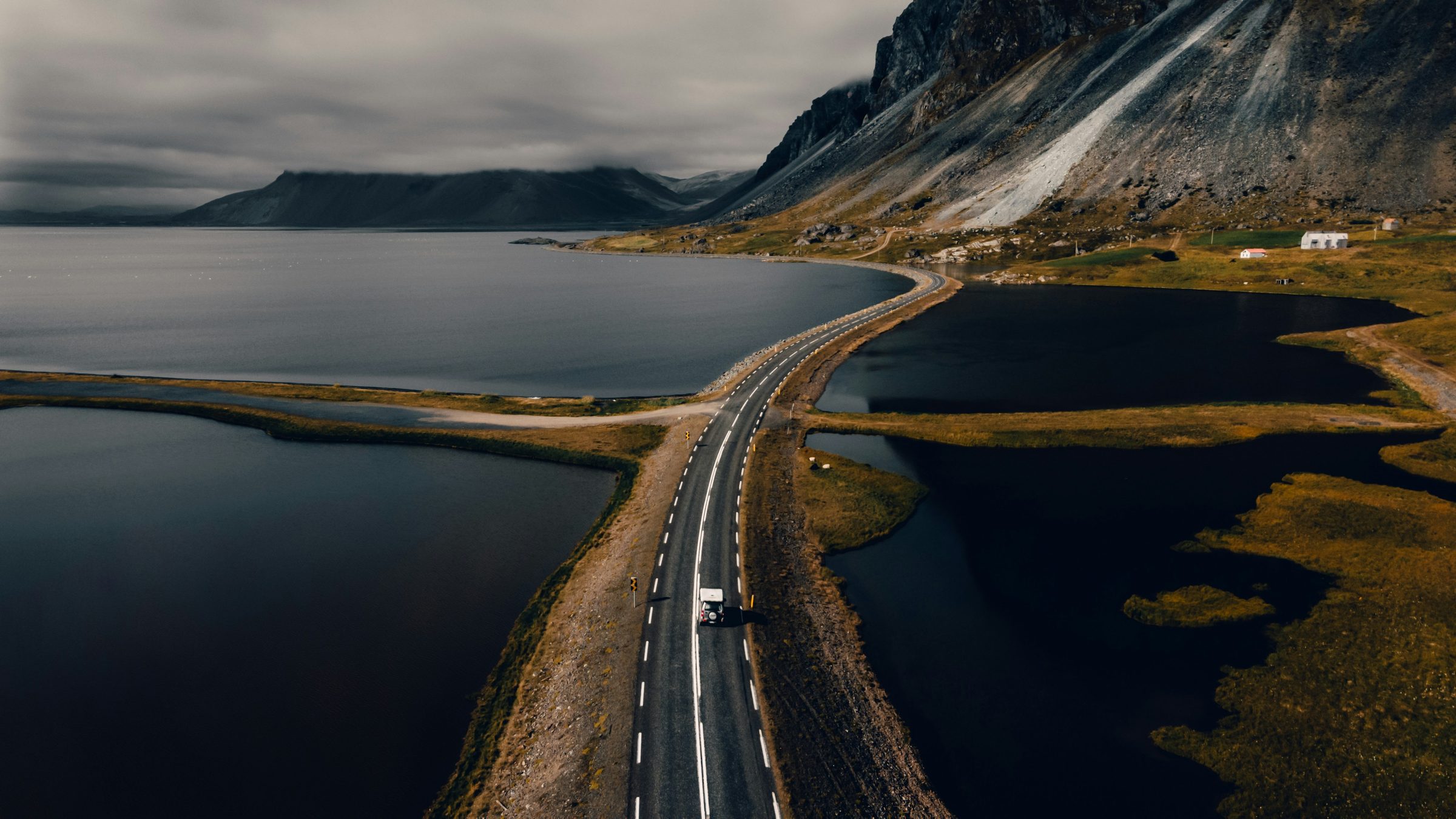
If possible, sleep near your chosen viewing area on August 11 and keep August 12 flexible. Roads, parking areas and viewpoints may be busier than normal, especially in western Iceland.
Sample Eclipse Itineraries
Simple 2-night Reykjavík plan
This is the easiest option. Stay in Reykjavík for two nights around August 12. On eclipse day, choose an open viewing location in or near the capital area, keep the afternoon clear, and avoid relying on a long drive. This works well for visitors who want the eclipse without sacrificing the rest of their Iceland trip.
3-night Snæfellsnes plan
Stay one night near Borgarnes or Snæfellsnes before the eclipse, one night on or near the peninsula for eclipse day, and one night in Reykjavík or west Iceland after. This gives you scenic options without committing to the full Westfjords drive.
4-5 night Westfjords plan
This is the serious eclipse-chaser version. Build the route around Patreksfjörður, Látrabjarg, Dynjandi, and Ísafjörður, but keep drive times realistic. Do not arrive in the far Westfjords on eclipse day itself if you can avoid it. Roads are slow, weather matters, and you want time to scout your viewing spot.
Short Reykjanes airport plan
If you are flying in mainly for the eclipse, Reykjanes can work well. Stay near Keflavík, Reykjavík, or the Blue Lagoon area, keep the afternoon open, and choose a viewpoint based on the latest cloud forecast. This is not the wildest plan, but it is practical.
Eclipse Safety
You need ISO 12312-2 certified eclipse glasses to look at the sun before and after totality. Normal sunglasses are not enough. Cameras, binoculars, and telescopes also need proper front-mounted solar filters; eclipse glasses alone are not enough for optics. Eye damage can happen quickly and may be permanent.
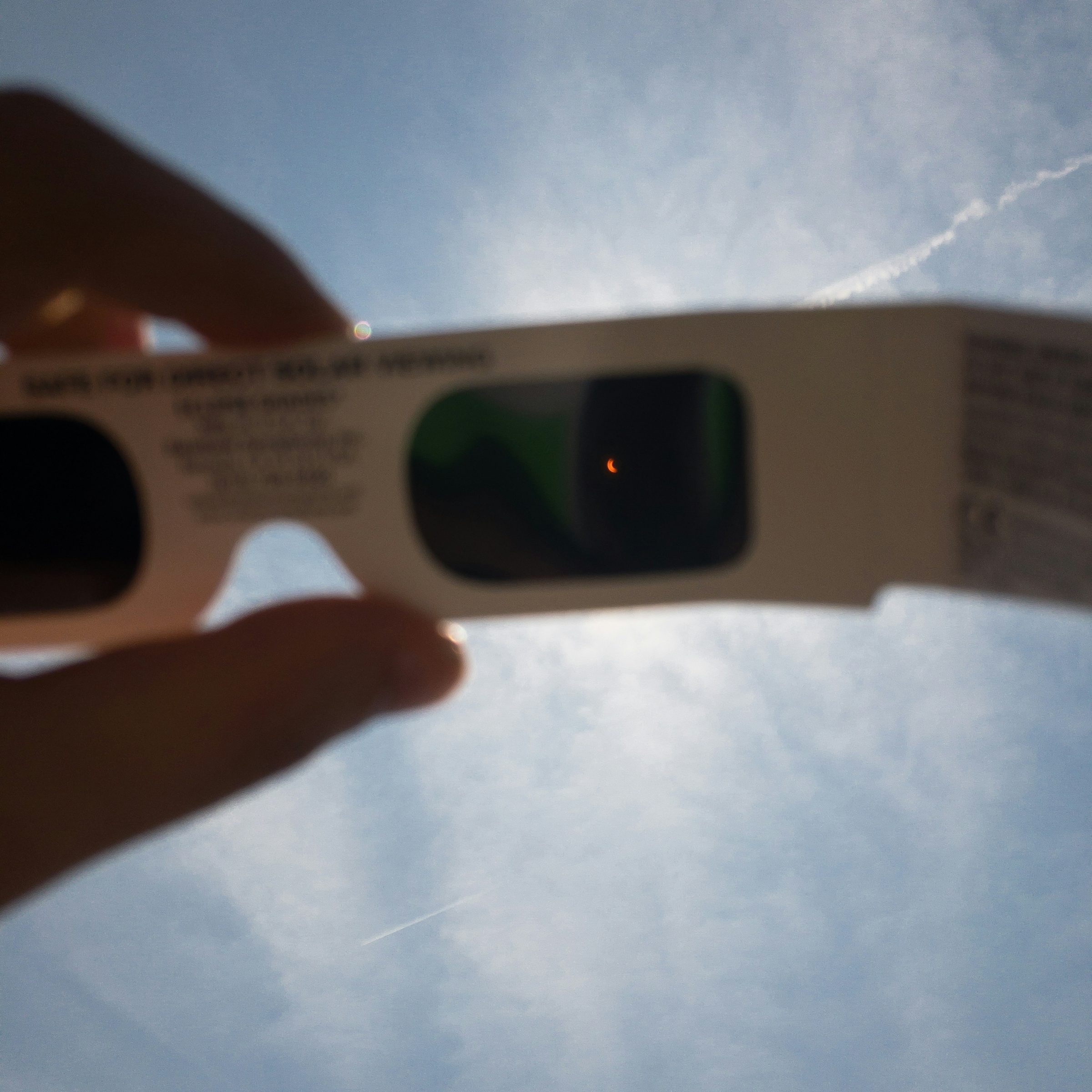
During the brief moment of totality only, it is safe to look without eclipse glasses. As soon as the sun begins to reappear, glasses go back on.
If you need glasses in Iceland, sólmyrkvagleraugu.is sells eclipse glasses, solar filters, and related viewing equipment. Buy early if you can; demand may rise sharply before August 2026.
Safety guidance follows NASA and AAS recommendations: use ISO 12312-2 eclipse viewers for direct viewing and proper solar filters for cameras, binoculars and telescopes.
Photography Tips
If you want photos, practice before eclipse day. The event is short, and totality in Iceland will not last long enough for a calm first attempt with unfamiliar equipment. Decide in advance whether you want to photograph the eclipse or experience it with your eyes.
For most travelers, the best photo may be the scene around the eclipse rather than a technical close-up of the Sun. Iceland gives you mountains, lava fields, ocean, cliffs, and city viewpoints. A wide shot of people watching the eclipse in an Icelandic landscape may tell the story better than a shaky zoomed image.
If you use a camera, research proper solar filters. Do not point cameras, binoculars, or telescopes at the Sun without the right protection. This is both an eye-safety issue and an equipment issue.
What to Bring on Eclipse Day
- Certified eclipse glasses for every person in your group.
- Warm layers, even in August.
- Waterproof jacket and trousers.
- Snacks, water, and a simple backup meal.
- Phone power bank and charging cable.
- Offline maps or saved directions.
- Tripod and solar filter if photographing the eclipse.
- Patience for traffic, crowds, and weather changes.
Simple Planning Advice
If you already have a Westfjords room, keep it and plan carefully. If you do not, look at Snæfellsnes, Reykjavík, Reykjanes, Borgarnes, and nearby western towns before assuming the trip is impossible.
The best eclipse plan in Iceland is not simply “go as far west as possible.” It is: get inside the path of totality, secure a place to sleep, keep weather flexibility, and choose a viewing spot with a clear western sky.
FAQ
Can you see the total solar eclipse from Reykjavík?
Yes. Reykjavík is inside the path of totality for the August 12, 2026 eclipse. Totality is shorter than in parts of western Iceland, but Reykjavík is one of the most practical places to watch.
Is Látrabjarg the best place to watch?
Látrabjarg is one of the most exciting places because of its location and longer totality, but it is not automatically best for everyone. Accommodation, road access, weather, and crowding may make other places more sensible.
What if the Westfjords are fully booked?
Look at Snæfellsnes, Reykjavík, Reykjanes, Borgarnes, Akranes, Keflavík, and other western bases. The Westfjords are not the only place where totality is visible.
Do I need eclipse glasses?
Yes. You need certified eclipse glasses for the partial phases before and after totality. Regular sunglasses are not safe for looking at the Sun.
Should I drive on eclipse day?
Keep driving short if possible. Roads and parking may be busier than usual, and weather may change plans. The best option is to sleep near your intended viewing area the night before.
Is August a good month for Iceland?
Yes, August is one of Iceland's main travel months, with relatively mild conditions and long days. But it is also busy and expensive, and the eclipse will add extra demand in western Iceland.