Almost every first-time visitor to Iceland asks the same question: Blue Lagoon or Sky Lagoon? They are the two big-ticket geothermal experiences, both expensive, both heavily marketed, and both genuinely impressive in their own way. If you are still deciding between lagoons, local pools, and wild hot pots, start with the full hot springs in Iceland overview. This page focuses only on the two famous lagoons.
Here is an honest local take: which one is worth your money, who they each suit, and the third option most tourists never consider.
Blue Lagoon — the original
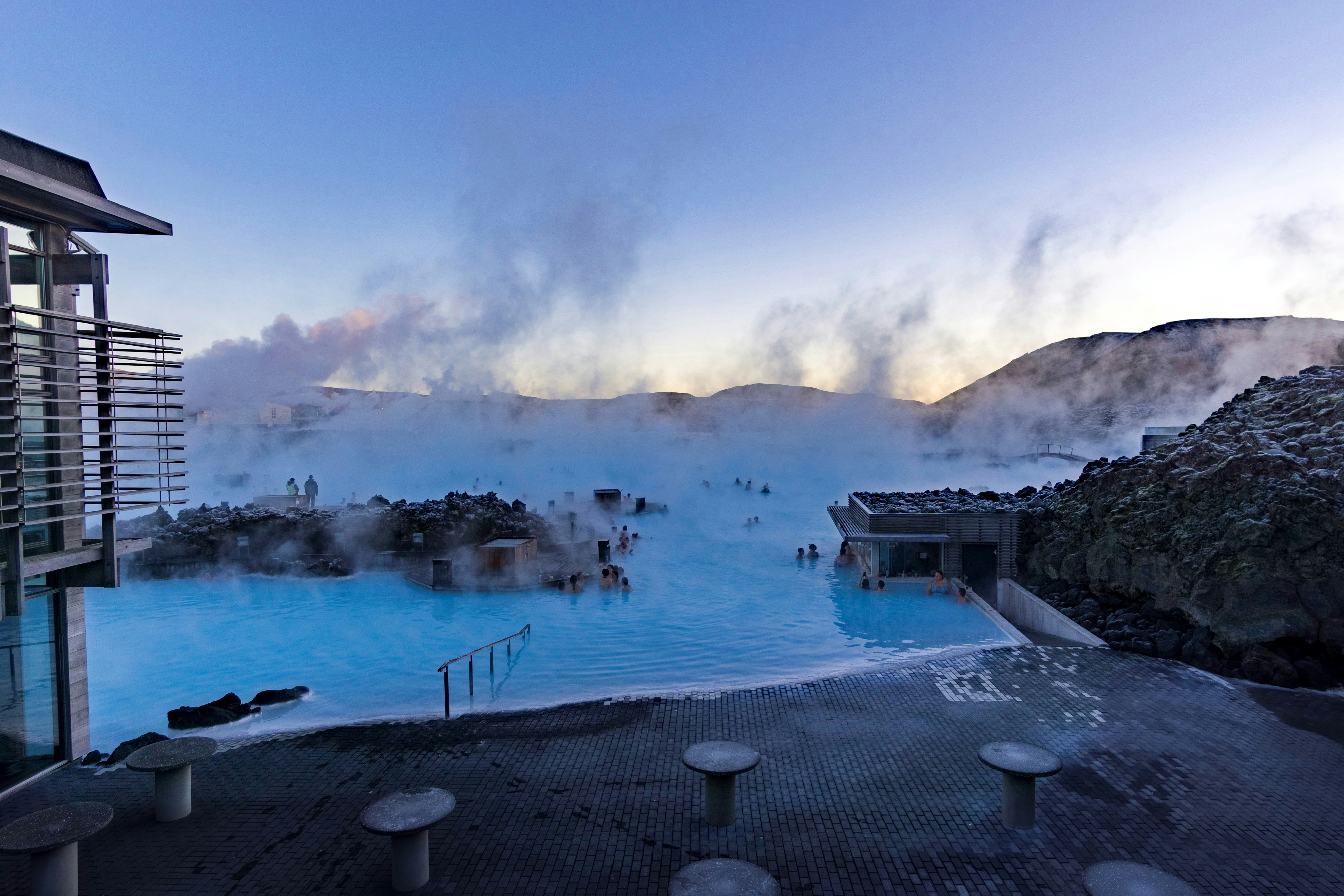
The Blue Lagoon is Iceland's most famous attraction and one of the most visited tourist sites in all of Europe. The milky, blue-white water is geothermal seawater rich in silica and minerals — a by-product of the neighbouring Svartsengi power plant — and the setting, surrounded by black lava fields on the Reykjanes Peninsula, is genuinely striking. You can apply silica mud masks, drink at the swim-up bar, and watch steam rise against the sky.
The location matters: it sits roughly halfway between Keflavík airport and Reykjavík, which makes it perfect as a first stop on arrival or a last stop on departure. Many visitors plan their flights around a slot here.
Is it worth it? That depends on what you want. The Blue Lagoon is an extremely well-run, beautiful experience. It is also extremely expensive, must be booked weeks in advance, and is crowded with tourists. Icelanders almost never go there themselves. If you want a quintessential Iceland moment, it delivers. If you want to experience how Icelanders actually bathe, look elsewhere.
Sky Lagoon — the newer, sleeker option
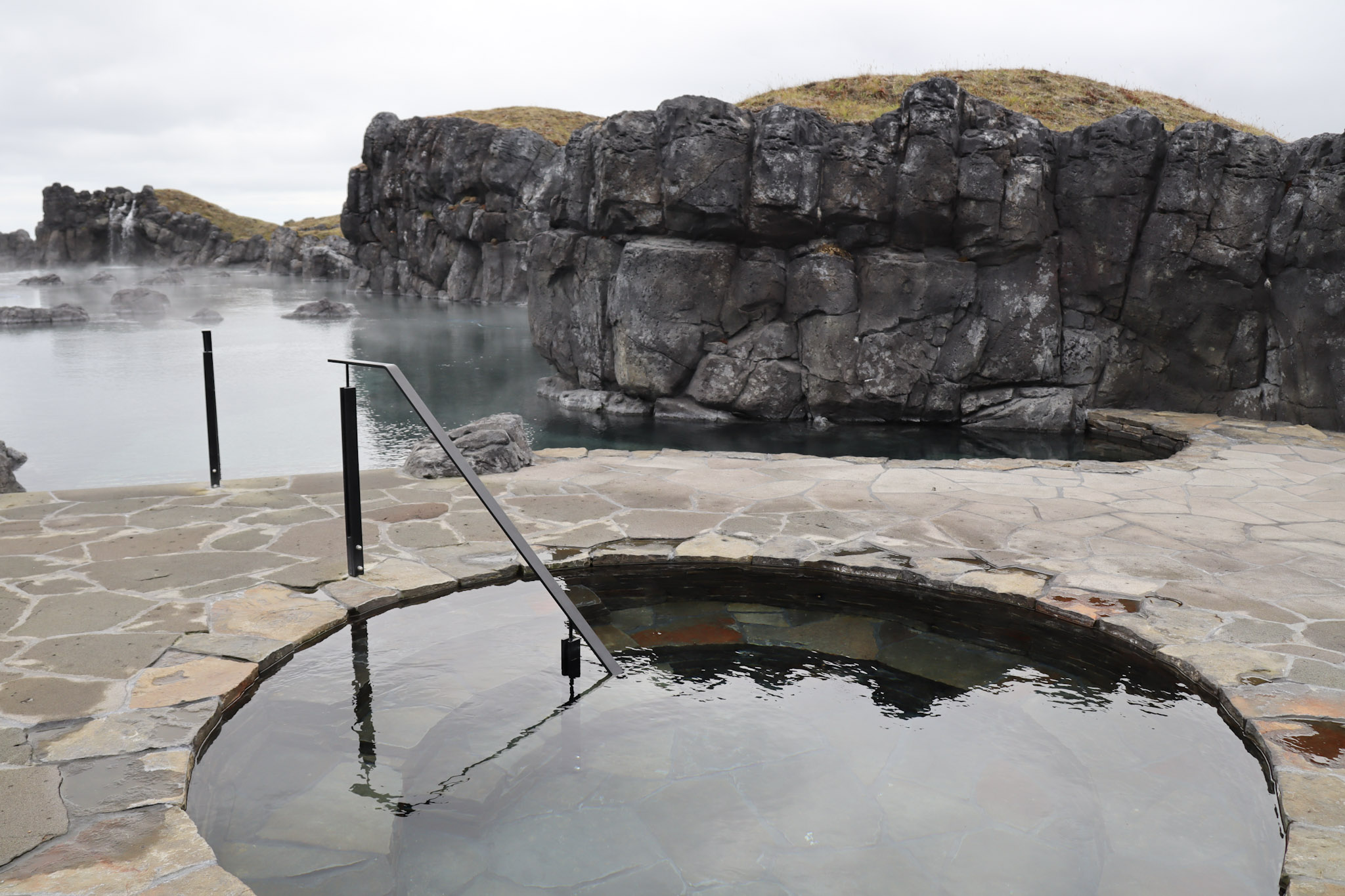
Sky Lagoon opened in 2021 and has quickly become a serious rival to the Blue Lagoon. Located just 10 minutes from central Reykjavík in Kársnes, it is set on a clifftop above the ocean, with an infinity edge that looks out to sea. The water is geothermal, the design feels more modern, and the seven-step ritual — moving between hot pool, cold plunge, sauna, steam room, and scrub — makes it feel more like a proper spa experience than a quick soak with a swim-up bar.
Sky Lagoon feels less crowded than the Blue Lagoon, is much easier to get to (no rental car required), and the ocean view is arguably more dramatic. It is still very much a tourist experience, but it is a very good one. Unlike the Blue Lagoon, you can reach Sky Lagoon on bus route 11 from central Reykjavík — useful if you do not have a rental car.
Getting There
The Blue Lagoon is on the Reykjanes Peninsula, about 50 minutes from Reykjavík by car and 20 minutes from Keflavík Airport. You need either a rental car or the dedicated Reykjavík Excursions bus (Flybus+ stops at the lagoon). Taxis from Reykjavík cost 15,000–20,000 ISK each way. Most people visit on the way to or from the airport — it is genuinely convenient for that. Blue Lagoon on Google Maps →
Sky Lagoon is in Kársnes harbour, about 10 minutes from central Reykjavík. Bus route 11 from Hlemmur square stops within walking distance (Kársnes stop). By car, it is straightforward with free parking on site. No airport transfer required. Sky Lagoon on Google Maps →
The honest comparison
| Blue Lagoon | Sky Lagoon | |
|---|---|---|
| Location | Reykjanes, near airport | 10 min from Reykjavík |
| Setting | Black lava fields | Clifftop with ocean view |
| Water | Milky blue silica water | Clear geothermal water |
| Atmosphere | Famous, busy, photo-focused | Spa-like, slightly calmer |
| Crowds | Very busy year-round | Busy but more manageable |
| Price | Higher | Slightly lower |
| Booking | Essential, often weeks ahead | Strongly recommended |
| Without a car | Bus transfer required | Easy bus from city centre |
| Best for | Milky-blue lava-field photos | Better value, central, modern |
The verdict
Pick Sky Lagoon. It is closer to Reykjavík, slightly cheaper, less of a tourist machine, and the ocean-edge setting is genuinely beautiful. The seven-step ritual gives it a more rewarding rhythm than just floating around with a drink. For most visitors, it is the better experience.
you have an early or late flight and want a stop on the way to or from the airport, you specifically care about the milky-blue water for the photos, or you have already done Sky Lagoon on a previous trip and want to compare.
The third option nobody mentions
Here is the thing locals will tell you: neither.
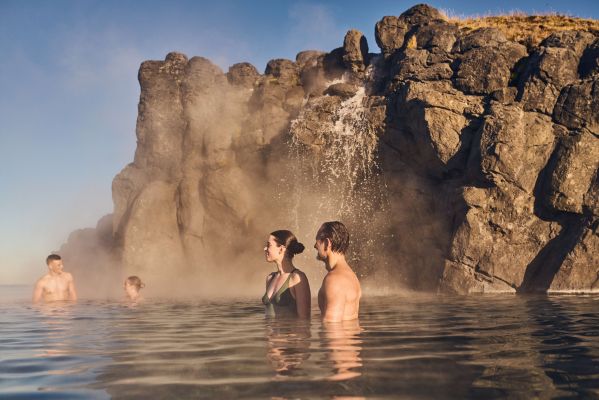
If you want to actually experience how Icelanders bathe — the side of Iceland that is not a packaged tourist product — you skip both lagoons entirely and go to a normal public pool. Sundlaug culture is the real soul of Icelandic bathing. Or if you want something wild and free, head out to a natural hot pot in the countryside. Both options cost a fraction of what the lagoons charge, and both are genuinely Icelandic in a way that the lagoons are not.
That does not mean you should skip the lagoons. It means: do one of them if you want the experience, then also do a sundlaug. The contrast tells you something real about Iceland.
Practical tips for both
- Book in advance. Walk-ups are usually impossible, especially in summer.
- Bring a hair tie if you have long hair — both lagoons recommend keeping hair out of the water (the silica especially is rough on it).
- Use the conditioner provided in the showers liberally. It keeps your hair from going crunchy for days afterward.
- Skip the cheapest tier if you can afford the next one up — the towel and one drink in the basic Blue Lagoon ticket is usually worth the upgrade.
- Showering naked is mandatory before you enter, like in any Icelandic pool. Just do it.
The bottom line
Both lagoons are good. They are not life-changing. They are not the "real" Iceland — they are very polished tourist experiences, and there is nothing wrong with that, as long as you go in expecting that. If you only have time and budget for one, make it Sky Lagoon. If you can also squeeze in a local sundlaug, do — that is the experience you will remember.