Ask a visitor what Icelanders eat and they will guess lamb, fish, maybe the infamous fermented shark. Almost nobody guesses ice cream. But ice cream in Iceland is not a summer novelty — it is a national habit, eaten all year, in every kind of weather. Walk past an ísbúð (ice cream shop) on a grey January evening with the wind blowing sideways and you will still find a queue inside and people eating cones in the car park. We do not wait for the sun. We never really have.
The thing tourists miss is that the ísbúð is a social institution, not just a shop. It is where families end a Sunday drive, where teenagers hang out, where a parent takes a kid after school to talk about their day. This guide is about that world — written by someone who grew up inside it — and about the two kinds of ice cream you need to understand before you order.
Ísbúð (pronounced roughly EES-booth) literally means "ice shop." It is what Icelanders call an ice cream shop, and it is the thing you are looking for — not a supermarket freezer or a petrol-station tub. This guide is about the ísbúð, where the ice cream is made soft and served over the counter.
The Old Ice Cream and the New Ice Cream
When you walk up to the counter, you are really choosing between two different things. Icelanders don't usually spell it out, but once you know the difference you will understand every ice cream menu in the country.
Mjólkurís — "milk ice" — is the old one. It is soft-serve: a lighter, milk-based ice pulled straight from a machine in a smooth swirl. It is softer and less heavy than what most visitors think of as ice cream, and it is what generations of Icelanders grew up on. This is the base of almost everything classic: the cone, the dip, the blended cup. If you want the traditional Icelandic ice cream experience, this is it.
Rjómaís — "cream ice" — is the newer one, and this is where visitors get it wrong: it comes out of the same machine, in the same soft swirl. The difference is not the texture, it is what goes in. Rjómaís is made with cream instead of milk, which makes it noticeably richer, denser and more indulgent on the tongue — the same soft-serve format, a heavier base. Plenty of Icelanders have drifted toward it over the years, but it sits right alongside the old milk-ice in the machine. You are not choosing a different kind of shop; you are choosing which swirl you want.
Here is the part that confuses visitors: these are not rival shops. Most ísbúðir serve both the old soft mjólkurís and newer cream-ice, side by side. You are not picking a "soft-serve place" versus a "gelato place" — you are picking at the counter, in the moment. Ask an Icelander and most of us, more often than not, still reach for the classic milk-ice. It is comfort, not fashion.
The Ísbúðir Locals Love
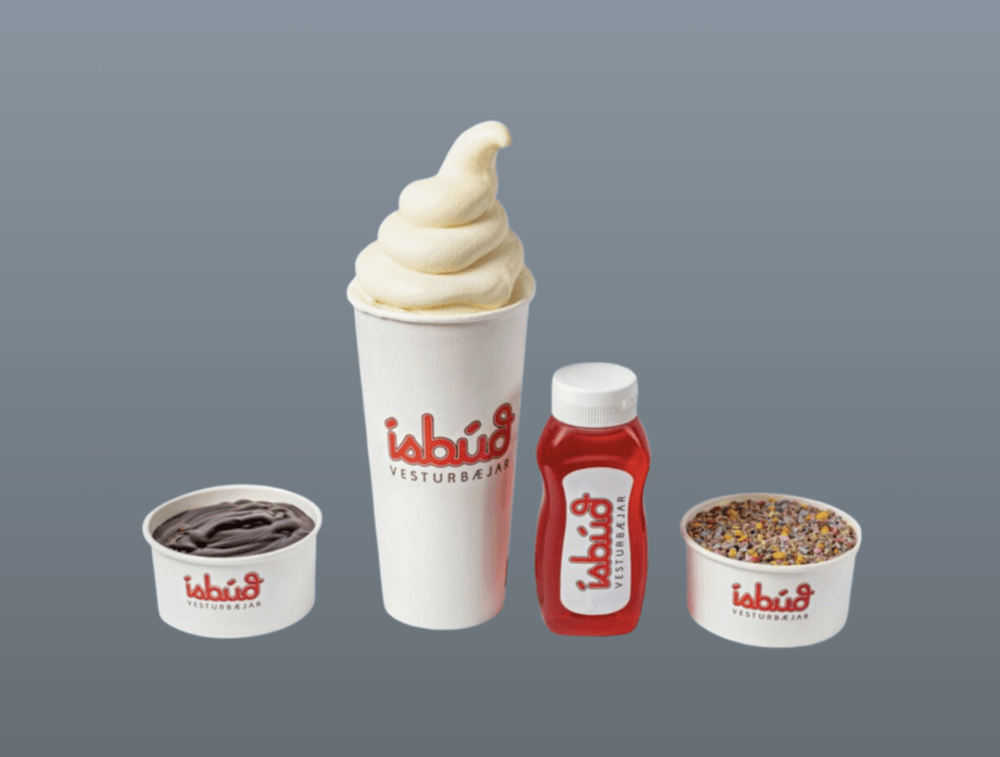
Iceland has ice cream shops everywhere, and half the fun is that every town and neighbourhood has its own. But a few have become genuine institutions — the ones locals name without thinking.

How to Order Like a Local
Once you are at the counter, there are three orders worth knowing. Get any of these and you are ordering the way Icelanders actually do.
The New Wave: Scooped Gelato
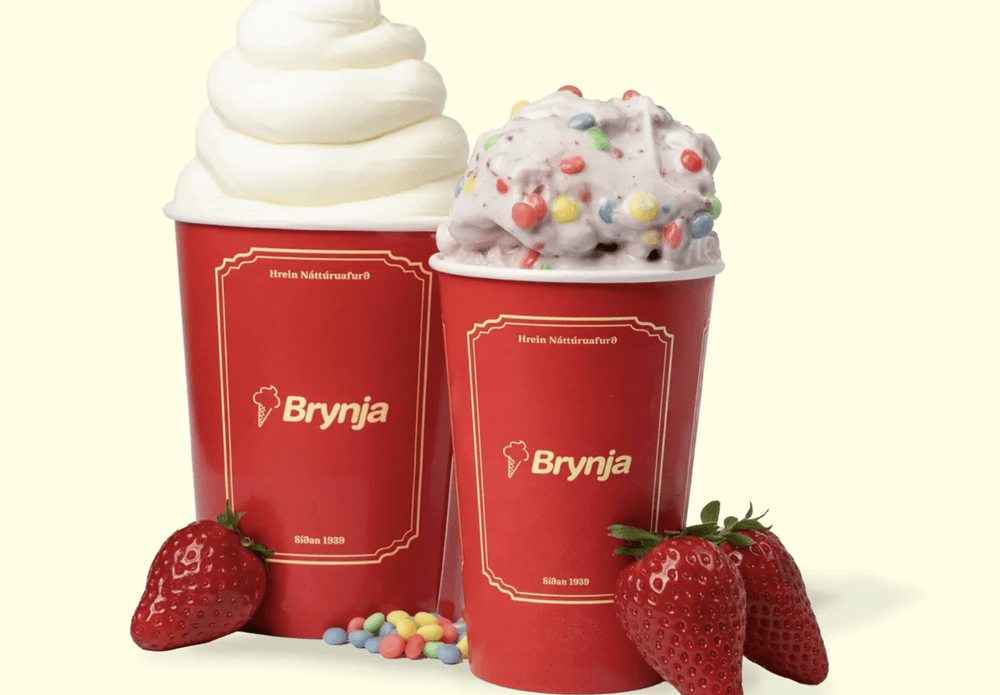
Everything above is the classic ísbúð world — soft ice from the machine, eaten the way Icelanders have for decades. But over the last ten years or so a second scene has grown up alongside it: scooped, tub-style ice cream, usually cream-dense and gelato-like, often made on the premises, and built around interesting flavours rather than the machine swirl. It has not replaced the old ísbúð — the two happily coexist — but it is worth trying on the same trip. Here are a few worth seeking out.

The Ísrúntur: Ice Cream as a Family Ritual
This is the part no guidebook will tell you, and the part that actually explains why ice cream matters here. Iceland has a long tradition of the ísrúntur — the "ice cream drive." In the old days it was the Sunday version: the family piling into the car after dinner, driving out to an ísbúð, and eating ice cream in the car while the weather did whatever it wanted outside. No destination, no reason. The ice cream was the outing.
That tradition is quieter now, but it never disappeared — it just changed shape. Plenty of families keep a version of it alive, and for many of us it has moved to the end of the week: the Friday-after-school ice cream run. My son and I do exactly this. We drive to the ísbúð, get our ice, and sit for a bit — and somewhere between the first bite and the last, the week comes out. School, friends, whatever is on his mind. There is something about a cone and a car that makes a kid talk in a way the kitchen table never quite manages.
That is the thing to understand about ice cream in Iceland. It is everywhere, and it is genuinely good — but what makes it matter is that it is an excuse to slow down and be together, in a country where the weather rarely invites you to sit outside and linger. If you want to travel like a local for twenty minutes, this is one of the easiest ways to do it: find an ísbúð, order a soft one with dýfa, and just sit with it.
Icelandic Ice Cream FAQ
Do Icelanders really eat ice cream in winter?
Yes, genuinely. Ice cream here is a year-round habit, not a summer treat. Ice cream shops stay busy through the darkest, coldest months, and eating a cone outside in the wind or falling snow is completely normal. Visitors often find this funny; to us it is just Tuesday.
What is the difference between mjólkurís and rjómaís?
They both come out of the same soft-serve machine — the difference is what is in the mix. Mjólkurís ("milk ice") is the classic, lighter one and the base of most traditional orders. Rjómaís ("cream ice") is made with cream instead of milk, so it is richer and denser, but it is the same soft swirl, not a scooped or gelato-style ice. Most shops have both, so it is a choice you make at the counter rather than a choice of shop.
What is a bragðarefur and how do I order one?
It is soft ice cream blended with sweets of your choice — the Icelandic original that predates the McFlurry. Just point at the mix-ins you want (chocolate, licorice, biscuits, fruit) and they blend it into the ice for you. It is the most classic order in the country.
Where should I go for ice cream in Reykjavík?
For the traditional soft-serve and a proper bragðarefur, Ísbúð Vesturbæjar on the west side of the city is the local classic — easy to reach and in a genuinely local neighbourhood rather than a tourist strip. If you specifically want the newer scooped, gelato-style ice cream instead, Valdís on Grandi is the best-known name, though that is its own separate style.
The Bottom Line
Icelandic ice cream is not on many travel itineraries, and that is exactly why it is worth doing. It is open all year, and it drops you straight into an ordinary piece of local life that most visitors never touch. Learn the two kinds — soft mjólkurís for the classic experience, scooped rjómaís for the modern one — order a bragðarefur or a cone with dýfa, and if you can, do it the way we do: park somewhere, take your time, and let the ice cream be the reason to stop for a while.