Summer is the easiest time to visit Iceland — and the busiest. Roads are open, the highlands become accessible, days are absurdly long, puffins return to the cliffs, hiking opens up across the country, and the weather, while never tropical, is the mildest it gets. Most first-time visitors come in summer for good reason.
This guide covers what summer actually looks like on the ground: the midnight sun, when the highlands open, what you can and cannot do, how busy it really gets, and the things even repeat visitors get wrong about an Icelandic summer.
June is brightest and freshest, with long daylight and fewer crowds than peak. July is full access — every road, every trail, every ferry. August is still long days but the light starts shifting and prices peak. Pack for wind and rain regardless, and book early if you are coming between mid-June and mid-August.
Is Iceland Worth Visiting in Summer?
Yes, if you want highland access, multi-day hikes, the full Ring Road in one trip, puffins, whale watching at peak, easy driving, midnight sun walks, or your first Iceland trip with as little stress as possible.
Probably not, if you specifically want northern lights, ice caves, winter landscapes, dramatic stormy light, low prices, or solitude at the famous sights. For those, see the Iceland in winter guide.
The Midnight Sun
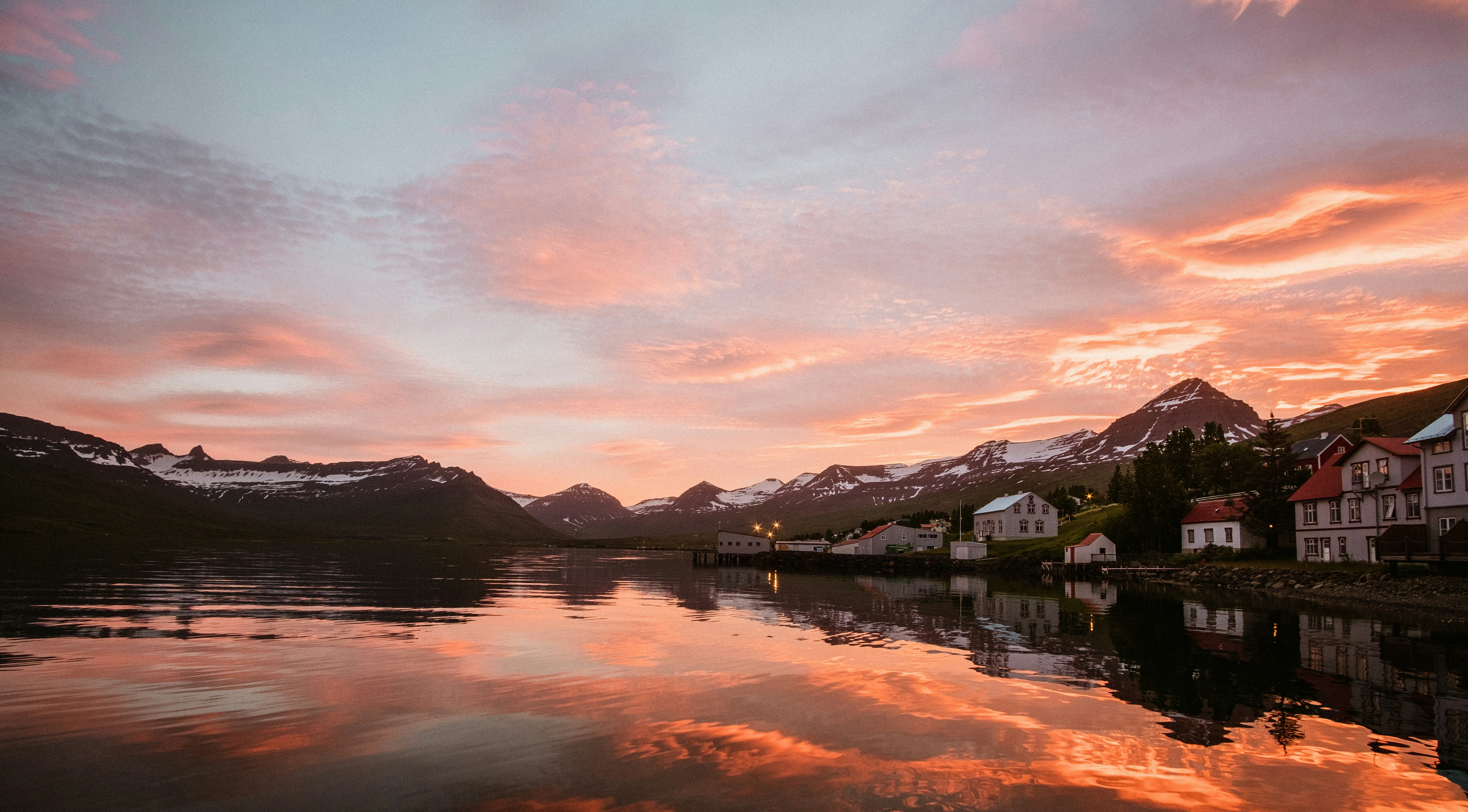
From late May to late July, Iceland has essentially no darkness. The sun dips toward the horizon, and at the solstice (around 21 June) it barely sets at all in the north. Reykjavík gets a long, slow twilight; Akureyri and the Westfjords get even less darkness.
This sounds romantic and is, mostly. But it is also a planning factor. Sleep can be harder than you expect — pack an eye mask or check that your accommodation has blackout curtains. On the upside, you can hike at 11pm, photograph waterfalls at midnight, and never feel rushed by sundown.
Famous places like Geysir, Gullfoss, Seljalandsfoss and the Blue Lagoon are at their quietest between 8pm and midnight in summer. Tour buses are gone, light is golden, and you can photograph them almost alone. Eat dinner early, then go.
June, July, August — What Each Month Looks Like
June — long days, fresh landscape, lighter crowds
June is the best balance for many travellers. Daylight is at its longest, lupins are blooming, the landscape is fresh and green, puffins are on the cliffs, and crowds are noticeably lighter than July. The downside: the highlands are usually not open yet. Roads like F35 to Kerlingarfjöll, F88 to Askja, and the route to Landmannalaugar usually open between mid-June and early July depending on snow.
If your trip does not depend on highland routes, June is hard to beat. Pair the season with the best time to visit Iceland guide for a deeper look at month tradeoffs.
July — peak access, peak crowds
July is the only month where you can confidently say "every road is probably open." Landmannalaugar is in full swing, the Laugavegur trek is comfortable, Þórsmörk is reachable, the highlands are alive. Whales are abundant, puffins are still around, and weather is at its mildest.
It is also peak tourist season. The Golden Circle, South Coast, Blue Lagoon, Sky Lagoon, Ring Road hotels, and Reykjavík restaurants are all heavily booked. Reserve accommodation and car rental months in advance, and expect famous places to feel shared.
August — long days fade, prices peak
Early August still feels like full summer. Late August starts to shift — nights get noticeably darker, the first northern lights of the season can appear if the sky cooperates, and there is a hint of autumn colour in the highlands. Prices and crowds remain high through mid-August because of school holidays in many countries, then ease in late August.
If you want the best of both worlds — full highland access, long-ish days, and shoulder-season prices — late August into early September is a sweet spot.
The Highlands and F-Roads
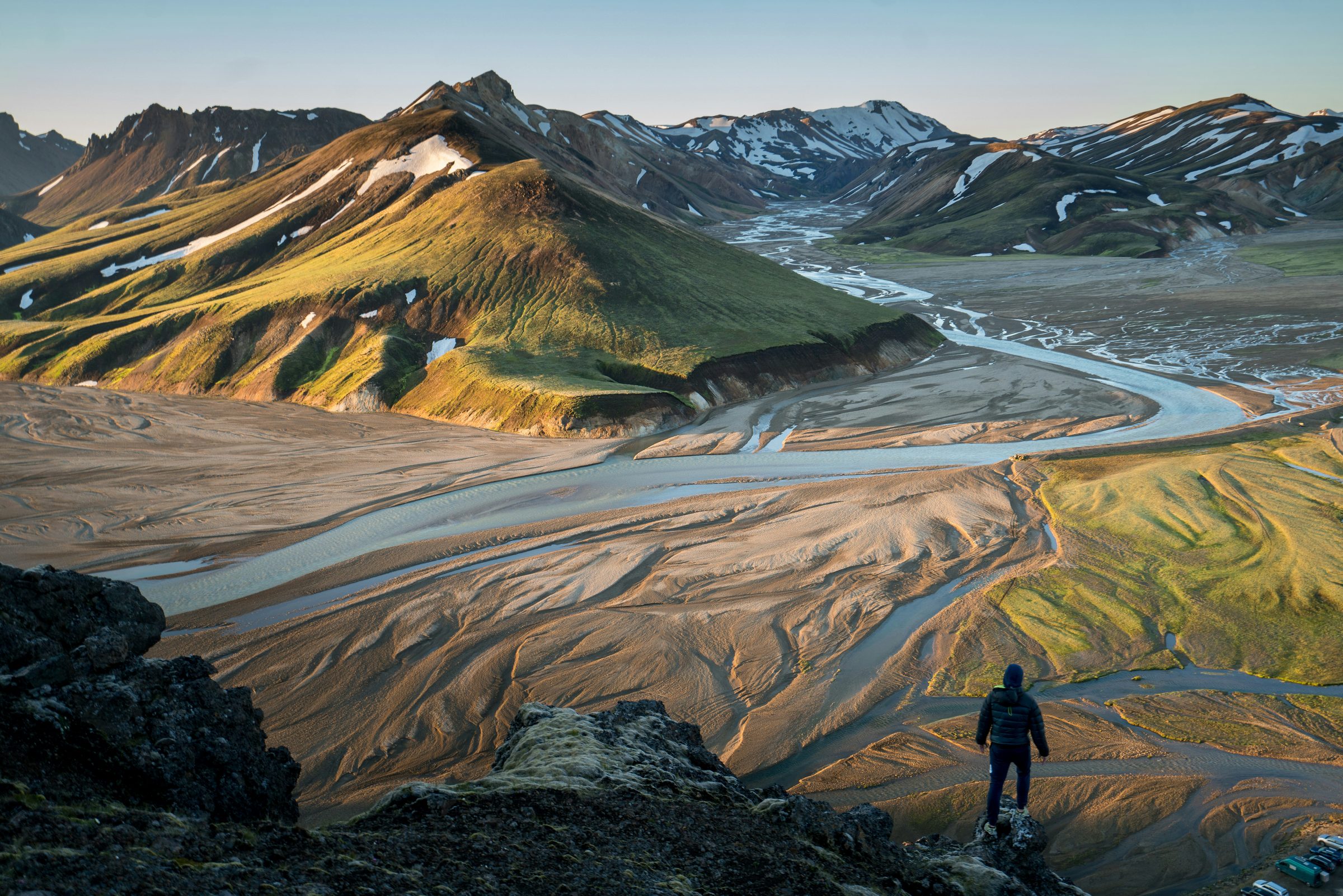
The Icelandic highlands (hálendið) are the vast empty interior — a moonscape of black sand, glaciers, hot springs, and rhyolite mountains. They are only accessible in summer, and only by F-roads (fjallvegir, mountain roads) that require a 4×4 by law.
F-roads typically open between mid-June and early July. The Icelandic Road Administration (Vegagerðin) publishes the official open dates at road.is. They close again with the first serious snowfall, usually in September or October.
Popular highland destinations:
- Landmannalaugar — rhyolite mountains, hot river, start of the Laugavegur trek. Access via F208 or F26.
- Þórsmörk — green valley between three glaciers. Requires river crossings; many rentals do not allow them. Use the bus from Reykjavík if you do not have a serious 4×4.
- Askja — caldera and crater lake in the central highlands. Long drive on rough roads but otherworldly when you arrive.
- Kerlingarfjöll — geothermal highland area with a beautiful hut and surrounding hikes.
It is illegal and unsafe to drive a 2WD car on an F-road. Most rental companies void your insurance if you try, and Iceland charges large rescue fees. If F-roads are on your plan, rent a proper 4×4 and double-check whether river crossings are allowed. For the full rental walkthrough see the car rental guide.
Wildlife at Its Peak
Summer is the best time for Iceland's wildlife. The key species are easy to find if you know where to look.
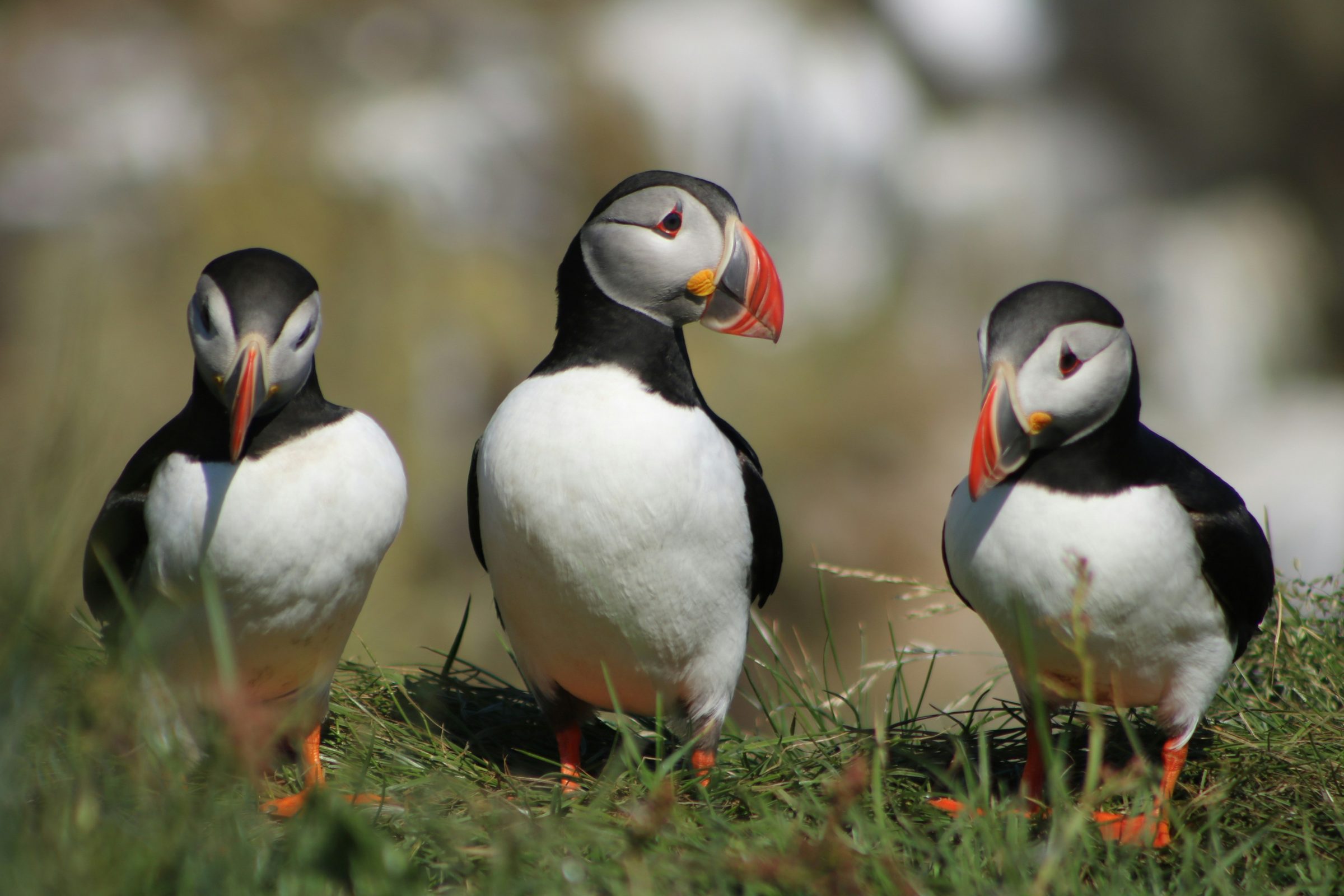
Puffins nest in Iceland from late May through mid-August. The most accessible spots are the Westman Islands (Heimaey), Dyrhólaey on the South Coast, Borgarfjörður Eystri in the East, and Látrabjarg in the Westfjords. Látrabjarg is the largest seabird cliff in Europe and the puffins there are unusually relaxed — you can lie a few metres from them.
Whales are seen year-round but peak in summer. Húsavík in the north is the best-known whale-watching town and has the highest success rates — minkes, humpbacks, occasionally blue and orca. Hauganes in Eyjafjörður (small-boat tours) and Reykjavík's Old Harbour are easier from the main tourist routes.
Arctic foxes are best seen in the Hornstrandir nature reserve in the far Westfjords, where they are protected and unusually approachable. For a deeper guide, see the wildlife in Iceland article.
Hiking Season
Summer is hiking season. Snow melts off most trails by late June, river crossings become possible, mountain huts open, and you can do multi-day routes that are impossible the rest of the year.
The two iconic multi-day treks:
- Laugavegur — 55 km, 4 days, Landmannalaugar to Þórsmörk. Huts must be booked months ahead. One of the great hikes in the world.
- Fimmvörðuháls — one long day or two, between two glaciers, through 2010 lava fields into Þórsmörk. See the Fimmvörðuháls guide.
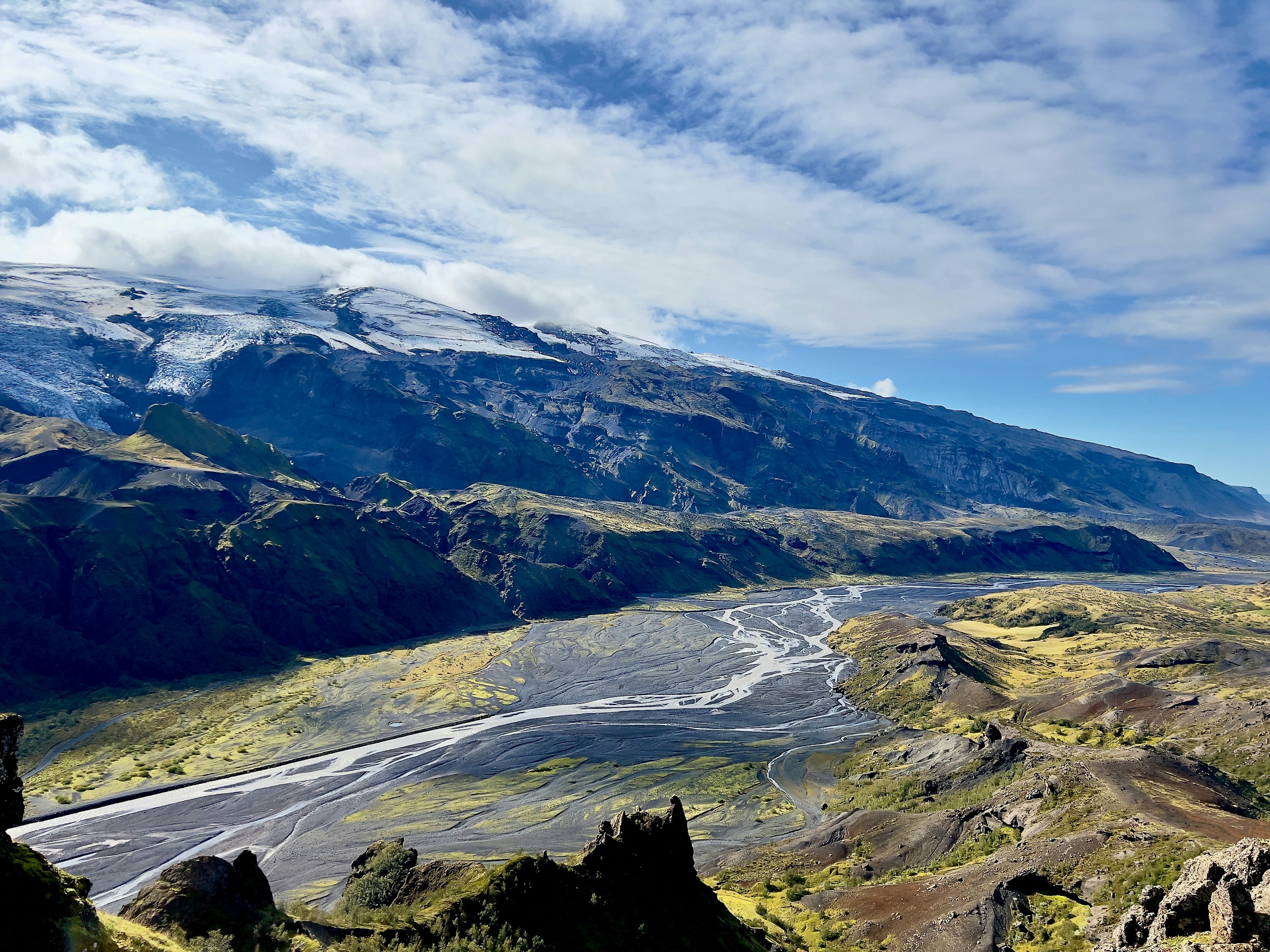
For shorter day hikes, almost every region has options. Reykjadalur (hot river valley near Hveragerði), Glymur waterfall, Mount Esja from Reykjavík, and the cliff walks at Arnarstapi on Snæfellsnes are all good summer-only or summer-easiest hikes.
Camping in Summer
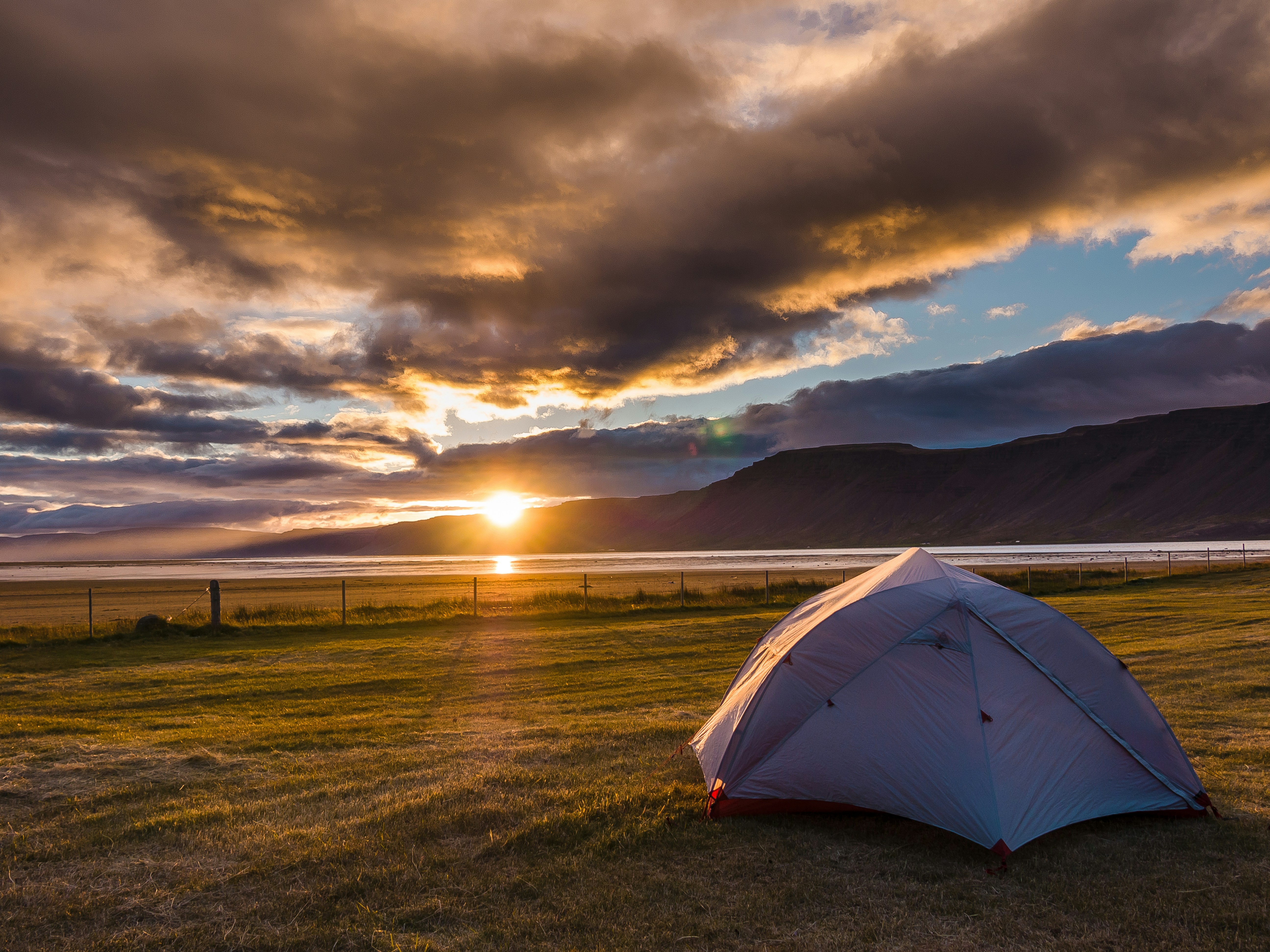
Summer is camping season in Iceland. The country has roughly 170 organised campsites, and between mid-June and late August most of them are open. Camping is one of the best-value ways to travel in Iceland — a flat camping fee is typically a fraction of a hotel room, and you wake up in places no hotel exists.
You have two main options:
- Bring or rent a tent and use a regular rental car. Cheapest setup. Works well in June–August. Pitch only at marked campsites.
- Rent a camper van or motorhome. More expensive but combines transport and accommodation in one. Companies like Happy Campers and CampEasy specialise in this. Very popular in summer — book early.
Most organised campsites have toilets, cold water and a washing-up area; many have hot showers (often paid by coin or app), kitchens, and electricity hookups. Reykjavík, Akureyri, Vík, Höfn, and Skaftafell all have well-run sites. Smaller villages often have a basic campsite that costs a few thousand ISK per night.
If you plan to camp more than a few nights, the Camping Card pays for itself fast. It covers stays at around 35–40 partner campsites across the country for one flat annual fee. Buy it before you arrive or on day one.
Iceland tightened its wild-camping rules in 2015. With very few exceptions (single tent on uncultivated land, with the landowner's permission, away from any settlement) you must pitch at an organised campsite. Fines are real and enforcement has increased. The reward is that campsites are everywhere — you do not need to wild-camp to camp cheaply.
Summer Festivals and Town Celebrations
Summer brings the densest calendar of festivals and cultural events in Iceland. The big national dates are useful to know, but the more uniquely Icelandic experience is the bæjarhátíðir — local town festivals that almost every village holds for one weekend each summer, usually with the entire town turning out.
The big national dates
- 17 June — Þjóðhátíðardagurinn (National Day) — Iceland's independence day. Parades, brass bands, free outdoor music, traditional costumes, kids in face paint, and a generally festive atmosphere in Reykjavík and most towns. The Reykjavík parade starts at Austurvöllur in front of the parliament.
- Sjómannadagurinn (Seamen's Day, first Sunday of June) — celebration of Iceland's fishing heritage. Harbour towns put on competitions: rowing races, swimming in the harbour, rescue-line throwing. Reykjavík, Akureyri, Vestmannaeyjar, Hafnarfjörður and most fishing villages do this in style.
- Reykjavík Pride (early August) — one of the largest single gatherings of the year. Per capita it is one of the biggest Pride parades in the world — locals say "everyone you know" walks in it.
- Menningarnótt (Reykjavík Culture Night, late August) — one Saturday in August the entire city centre becomes a free outdoor festival: open studios, free concerts on street corners, fireworks over the harbour at night. Easily the busiest night in Reykjavík.
Þjóðhátíð in the Westman Islands — the big one
If you can plan a trip around one festival in Iceland, make it Þjóðhátíð in Vestmannaeyjar (the Westman Islands). It runs over Verslunarmannahelgin — the August bank holiday weekend, the first weekend of August. It is the largest outdoor festival in the country and a deeply Icelandic experience.
The history goes back to 1874. The Westman Islanders could not reach the mainland for the celebration of Iceland's new constitution due to bad weather, so they held their own festival in a valley called Herjólfsdalur. They have done it every year since.
What it actually looks like: the entire town of Heimaey (population ~4,500) plus tens of thousands of visitors set up white tents across the floor of Herjólfsdalur, a green volcanic crater valley. There are three nights of music on a main stage, a colossal bonfire (brennan) lit on the cliff above the valley, a torch parade around the natural amphitheatre, and the singing of Brekkusöngurinn — the "hillside song" — where tens of thousands of people sing Icelandic songs together led from the slope. On the final night there is a fireworks show set against the cliff face that is genuinely one of the most beautiful in the country.
Many Icelanders go every year. There is a specific Þjóðhátíð song chosen each summer that becomes inescapable on radio and Spotify in the weeks before. Wearing white is traditional. Sleeping is not.
Book the Herjólfur ferry (Landeyjahöfn–Vestmannaeyjar) the moment Þjóðhátíð dates are confirmed — it sells out months in advance, including the return. Camping is in Herjólfsdalur itself or in overflow fields nearby; bring a sturdy tent and warm bedding (cold nights even in August). Festival passes are sold via dalurinn.is. If you do not have a ferry slot, flying to Vestmannaeyjar Airport is the alternative — also book early.
Bæjarhátíðir — the small-town festivals worth chasing
Almost every Icelandic town has a weekend each summer that belongs to it. Locals come back from wherever they live now, the town fills with music and food, and there is usually a parade, sports, fireworks, and a community feeling that is more interesting than any big festival. The most famous ones tourists can join:
- Fiskidagurinn mikli — Dalvík (first Saturday in August) — "The Great Fish Day". The fishing village of Dalvík serves free seafood — tens of tonnes of it — to up to 30,000 visitors. Cod, langoustine, salmon, fish soup, plokkfiskur. One of the warmest local festivals in the country.
- Síldarævintýrið — Siglufjörður (around Verslunarmannahelgin) — "The Herring Adventure". Recreates Siglufjörður's herring boom of the early 20th century. Salt-the-herring competitions, fishermen's dances, period costumes.
- Bræðslan — Borgarfjörður Eystri (late July) — a small but beloved music festival in an old herring factory in one of the most remote and beautiful fjords in the East. Tickets are limited, atmosphere is intimate, and the drive there is worth it on its own.
- Akureyrarvika — Akureyri's town week, with concerts, sports and a strong family feel in Iceland's second city.
- Írskir dagar — Akranes (early July) — "Irish Days" in Akranes, celebrating the town's Irish roots. Parades, music and beer.
- Færeyskir dagar — Eskifjörður / Faroe Days — celebrates the close ties between East Iceland and the Faroe Islands, with Faroese music and food.
- Bryggjuhátíð — Drangsnes / Hólmavík — small harbour festivals in the Westfjords with a strong local-only feel. Worth catching if you happen to be in the Westfjords.
If your trip overlaps with a bæjarhátíð in whatever town you are passing through, change your plan and join it. They are usually free, they are full of locals rather than tourists, and they are one of the best ways to feel what Icelandic summer is actually about.
Other dates worth knowing
- Iceland Airwaves (early November, but tickets sell in summer) — Reykjavík's main music festival.
- Torfæra — Iceland's extreme motorsport, with championship rounds usually in summer. See the Torfæra guide.
- Sumardagurinn fyrsti (first day of summer, late April) — traditional holiday celebrated across the country, despite often falling on a snowy day.
Crowds, Prices and Booking
Summer is when Iceland is busiest and most expensive. Honest expectations:
- Book accommodation 3–6 months ahead for July and early August, especially outside Reykjavík. Small towns on the Ring Road have limited beds and they fill fast.
- Car rental is significantly more expensive in summer than winter, and the cheap options disappear first. Book early. See the car rental in Iceland guide.
- Restaurants in popular spots (Vík, Höfn, Akureyri, Reykjavík) need reservations on weekends.
- Famous sights are crowded between 10am and 4pm. Use the long daylight — go early morning or late evening. The crowds at Seljalandsfoss at 9pm in July are a fraction of what they are at noon.
- Tour prices peak. Whale watching, glacier hikes, bus tours and Blue Lagoon all charge their highest rates between June and August.
If budget is a major factor, look at the budget tips for Iceland guide — most of its advice applies even in peak season.
Summer Weather Reality
"Summer" in Iceland does not mean what it means in southern Europe. Average temperatures are 10–15°C, with rare days reaching the low 20s. Wind is constant. Rain is frequent. A "perfect" summer day can shift to cold and wet within an hour. Locals dress in layers year-round for a reason.
Northern Iceland and the East are statistically drier and warmer than the South in summer. If you are sensitive to grey weather, weight your itinerary toward the North.
What to Pack for Summer
Even in July, you need windproof and waterproof gear. The single biggest mistake summer visitors make is packing for "European summer" temperatures and getting caught out by a wet, windy day at Reynisfjara or on the highlands.
For a deeper season-by-season list, the Iceland packing list guide covers it in full.
Best Summer Routes and Trips
Summer opens up the whole country, so you have real choice. A rough guide by trip length:
- 3–5 days — Reykjavík base, Golden Circle, South Coast as a 2-day loop, optionally Snæfellsnes. The South Coast 2-day itinerary works perfectly in summer.
- 7–9 days — Full Ring Road. Doable in seven days if you push, much better in nine or ten. See the Ring Road guide.
- 10–14 days — Ring Road + Westfjords, or Ring Road + a highland detour to Landmannalaugar.
- 2+ weeks — Add a multi-day trek (Laugavegur), Hornstrandir in the far Westfjords, or a deep East fjords loop.
Iceland Summer FAQ
Does it get dark in Iceland in summer?
Barely. From late May through late July there is essentially no real darkness — the sun dips toward the horizon but the sky stays lit. By mid-August it begins getting dark again at night, and by late August some early northern lights are possible.
Can you see the northern lights in Iceland in summer?
No. The sky is too bright between late May and mid-August. Even on strong aurora nights, you will not see them. If northern lights are essential to your trip, come in September or later — read the northern lights guide for timing.
When do the puffins arrive and leave?
Puffins are in Iceland from late May to mid-August. By the end of August almost all have left the cliffs and gone back out to sea. If puffins are a goal, plan your trip for June or July.
Are the highland roads open in June?
Some are, most are not. F-roads typically open between mid-June and early July depending on snowmelt. Always check road.is the morning of your drive — the official opening dates are published there.
Is summer the most expensive time to visit Iceland?
Yes. July is peak, with the highest accommodation prices, the highest rental car rates, and the most expensive flights. Late August through September is the best value summer-ish window if budget matters.
The Bottom Line
Summer is Iceland on easy mode. Long days, open roads, full access, mild weather, puffins on the cliffs, whales in the bays, and hiking trails in every region. It is also the busiest and most expensive time of year — book early, expect the famous places to feel shared, and use the late evening light to escape the worst of the crowds.
If this is your first Iceland trip, summer is the right answer for almost any plan. If you have been before and want a different country, the winter version is genuinely a different experience.