Seeing the northern lights is on almost every Iceland visitor's wish list — and for good reason. On a clear night, away from city lights, the aurora borealis can fill the entire sky in curtains of green, purple, and white. But seeing them is never guaranteed. What separates people who see them from people who don't is usually preparation — knowing where to go, when to go, and how to read the forecast.
The northern lights are a natural phenomenon. No tour company, app, or forecast can guarantee you will see them. What you can do is give yourself the best possible chance — by going at the right time of year, getting away from light pollution, and being patient. Bring a blanket, a flask of something warm, and settle in.
How the Northern Lights Work
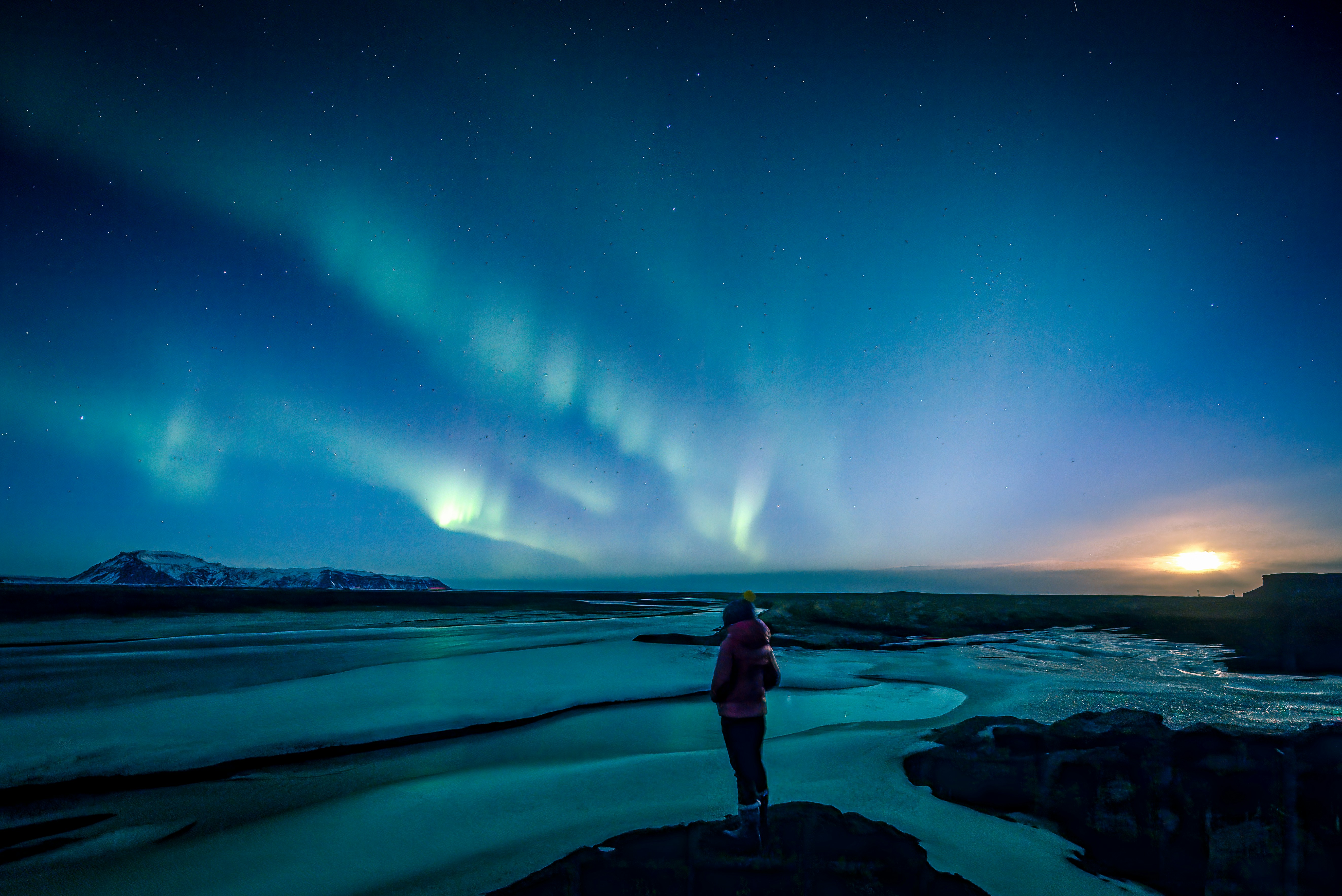
The aurora borealis is caused by charged particles from the sun colliding with gases in the Earth's atmosphere. When these particles interact with oxygen and nitrogen at high altitudes, they release energy as light — the green, purple, and white colours you see in the sky. The strength of the display depends on solar activity, measured on the KP index from 0 to 9. In Iceland, you can often see the lights at KP 2 or above, though a KP of 4 or higher usually means a strong, visible display across the whole country.
Best Time of Year
You need darkness to see the northern lights — which rules out Iceland's summer months entirely. From late May to late July, Iceland experiences near-constant daylight (the midnight sun), and the aurora is completely invisible even when it is technically active overhead.
The best months are September through to March. October, November, and February tend to offer a good balance of darkness, reasonable weather, and strong aurora activity. December and January are the darkest months but also the most unpredictable for weather — cloud cover is the number one enemy of aurora watching, and Iceland's winter weather can be stubborn. The Iceland in winter guide covers the broader travel conditions.
Solar activity tends to peak around the spring and autumn equinoxes — mid-March and late September. These are statistically some of the best times to catch a strong aurora display. If you can plan your trip around these dates, do it.
Best Places to See the Northern Lights
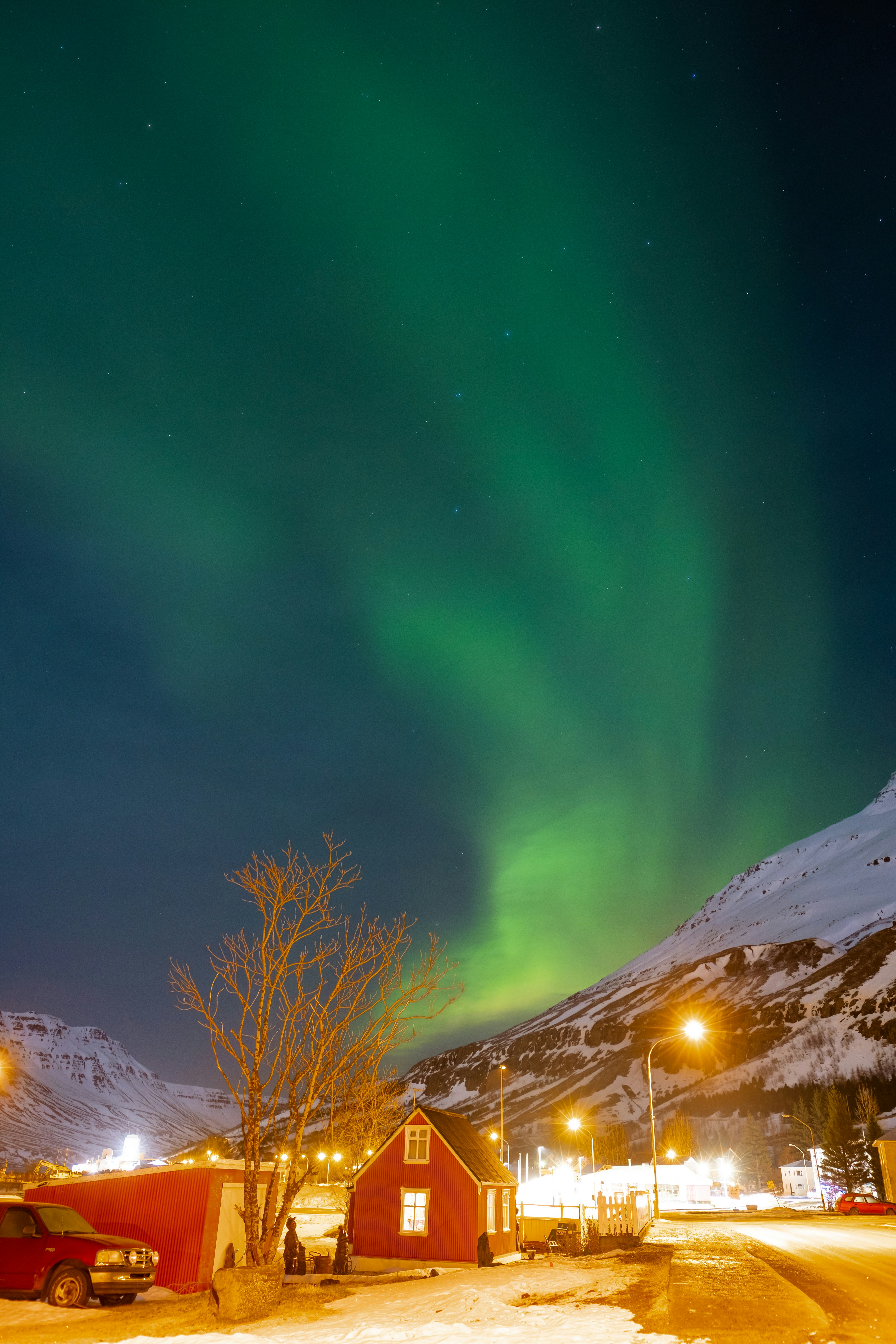
The single most important factor is light pollution. The further you get from towns and street lights, the darker the sky and the more visible the aurora becomes. The north of Iceland generally has less light pollution than the south, which is one reason locals tend to think of it as aurora country.
Should You Take a Tour or Go Yourself?
Both options work. The right choice depends on your circumstances, not on what travel blogs assume.
A tour makes sense if
- You don't have a rental car and you're staying in central Reykjavík — a tour is genuinely the easiest way out to dark skies
- It's your first night in Iceland and you want a guide reading the forecast for you
- Driving in winter weather makes you nervous (it should — Icelandic winter roads are no joke)
- You want a guide who can re-book you for free if the weather is bad — most reputable operators do this
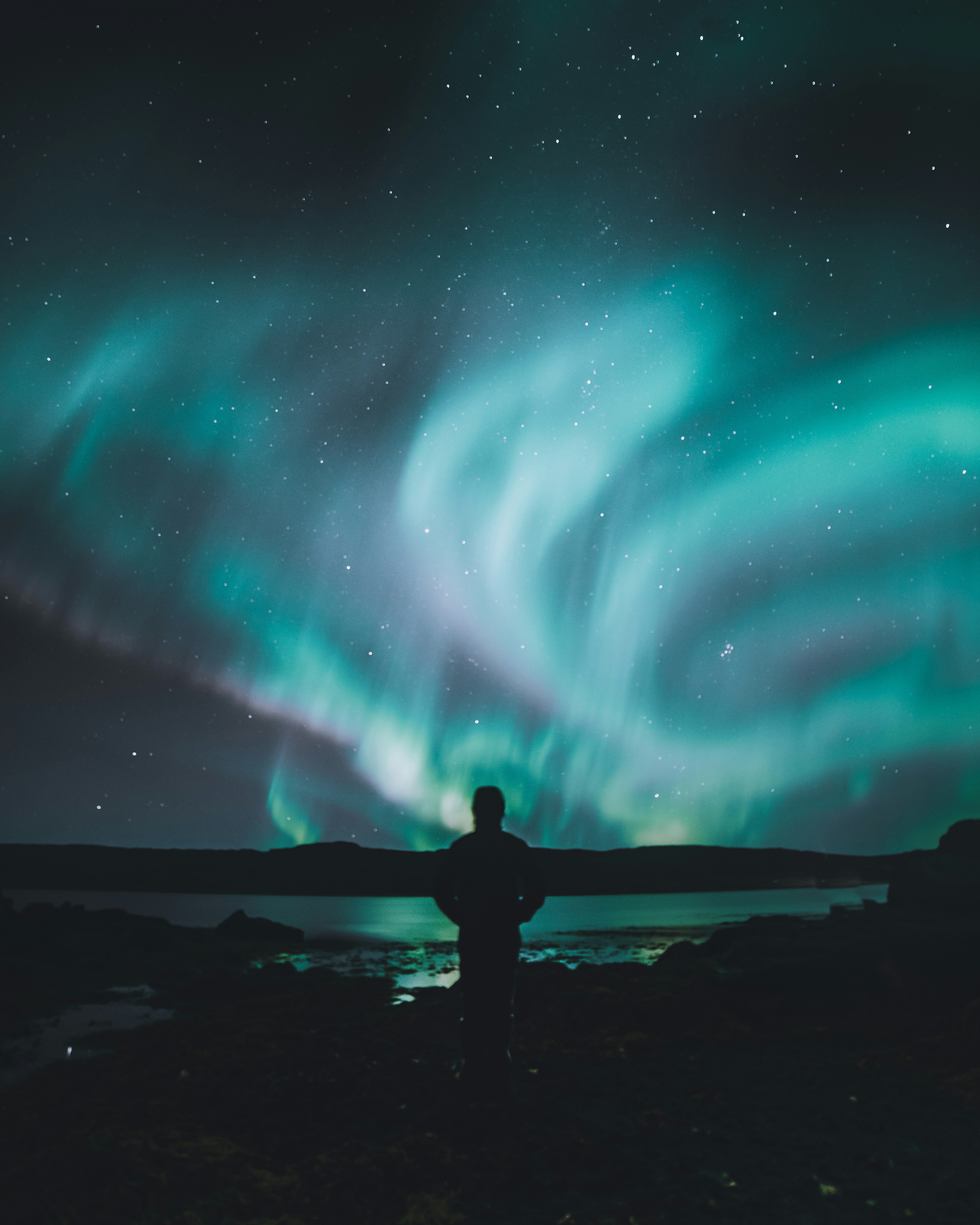
- You want a photographer who can capture you under the lights with a proper camera
Skipping the tour makes sense if
- You already have a rental car and at least two free evenings
- You're staying outside Reykjavík (Akureyri, Vík, Höfn — the aurora is essentially in your back yard)
- You're patient and willing to chase clear skies on your own schedule
- You'd rather spend the tour money on an extra night somewhere dark
If you do book a tour, look for ones that include free re-booking on cloudy nights. The aurora is not predictable enough to justify a one-shot tour with no guarantee. See northern lights tours from Reykjavík →
How to Forecast the Northern Lights
Two things need to align for a good aurora display: solar activity and clear skies. Both can be checked in advance.
The KP index
The KP index measures geomagnetic activity on a scale of 0–9. In Iceland, anything above KP 2 is potentially visible on a clear night. A KP of 4 or above usually means a strong, active display. You can check the current KP index and three-day forecast at the NOAA Space Weather Prediction Center or through the Icelandic Met Office aurora forecast.
| KP level | What to expect in Iceland |
|---|---|
| KP 1–2 | Faint aurora, visible only in very dark locations with clear skies |
| KP 3–4 | Good display, visible from most dark locations across Iceland |
| KP 5–6 | Strong display, visible even from the outskirts of Reykjavík |
| KP 7+ | Exceptional — fills the sky, visible across the whole country |
Cloud cover
Even on a high KP night, clouds will block the aurora completely. The Icelandic Met Office (vedur.is) publishes cloud cover forecasts that aurora hunters use obsessively. The key is to be flexible — sometimes driving an hour in a different direction to find a clear patch of sky makes all the difference. Iceland's weather changes fast, so check the forecast regularly throughout the evening.
Useful apps and websites
- vedur.is — the Icelandic Met Office, best cloud cover forecast and the official Iceland aurora forecast
- Space Weather Live — real-time KP index and solar activity
- My Aurora Forecast — simple app showing aurora oval position (also on Google Play)
- Windy — detailed cloud cover maps, very useful for finding clear patches on the night
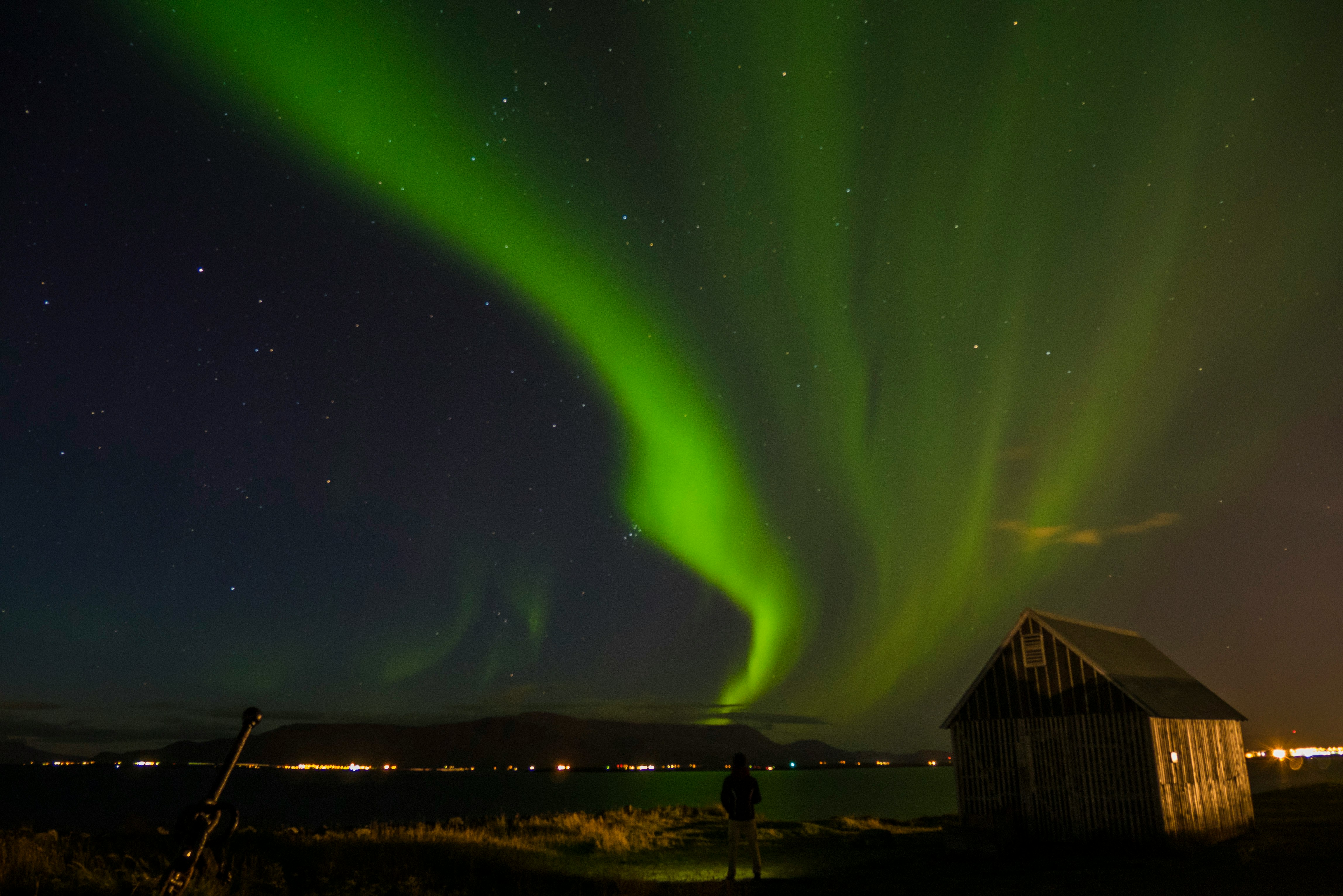
What to Bring
Aurora watching means standing outside in the dark for a long time — sometimes hours. Iceland is cold at night even in autumn, and the wind chill can be brutal. The biggest mistake first-timers make is not dressing warmly enough. The second biggest mistake is not bringing something to sit on or wrap up in while they wait.
Bring a blanket and something warm to drink. Aurora hunting is not a sprint — it is an evening out under the sky. The people who enjoy it most are the ones who treat it like a cosy outdoor experience rather than a stressful tick-box activity. Sit back, look up, and be patient. The wait is part of the magic.
How to Photograph the Northern Lights on a Phone
Most modern smartphones (iPhone 14 and newer, most Samsung Galaxy and Pixel phones) can capture the aurora reasonably well in night mode. Open your camera, switch to night mode or pro mode, and increase the exposure time to around 5–10 seconds. Rest the phone against something solid — a rock, a car roof, a fence post — so it does not move during the exposure. The result will not match a professional camera, but it will capture the moment.
One important note: the aurora often looks brighter and more colourful in photographs than it does to the naked eye. Do not spend the whole night staring at your phone screen. Put it down occasionally and just look up.
If photography is a big part of your trip, read the dedicated Northern Lights Photography in Iceland guide for camera settings, phone settings, tripod tips, composition, and common mistakes.
Can You See the Northern Lights from Reykjavík?
On a very strong aurora night (KP 5 or above), you can see the lights from the edges of Reykjavík — particularly from Grótta on the western tip of the city, or from Öskjuhlíð near Perlan. But for any aurora display weaker than that, the city's light pollution will wash it out. To see the lights properly, you really do need to leave Reykjavík.
If you are based in the capital and don't have a rental car, the easiest options are to drive 30–45 minutes out to Þingvellir or up onto Mosfellsheiði on a clear night, or to book a tour. The aurora is rarely visible standing on Laugavegur, no matter what the forecast says.
The Bottom Line
Seeing the northern lights in Iceland is mostly a matter of patience and being in the right place at the right time. Go in winter, get out of the city, watch the forecast, and be ready to spend a few cold hours waiting. Bring a blanket and something warm to drink. Most importantly: do not put so much pressure on this one experience that you forget to enjoy everything else Iceland has to offer. The lights are a bonus, not the whole trip.