Autumn is the least written-about season in Iceland, and quietly one of the best. The Northern Lights return, the crowds thin out, the tour buses shrink, and prices ease off summer peak. Days are still long enough to drive properly, but the light gets that low, golden quality only autumn has. And a few things happen here in September that no other month of the year gives you.
This guide covers what an Icelandic autumn actually looks like on the ground: when the aurora returns, when F-roads shut for the year, sheep round-ups in the countryside, what the weather is really doing, festivals worth catching, and how autumn compares to summer and winter if you are trying to pick a season.
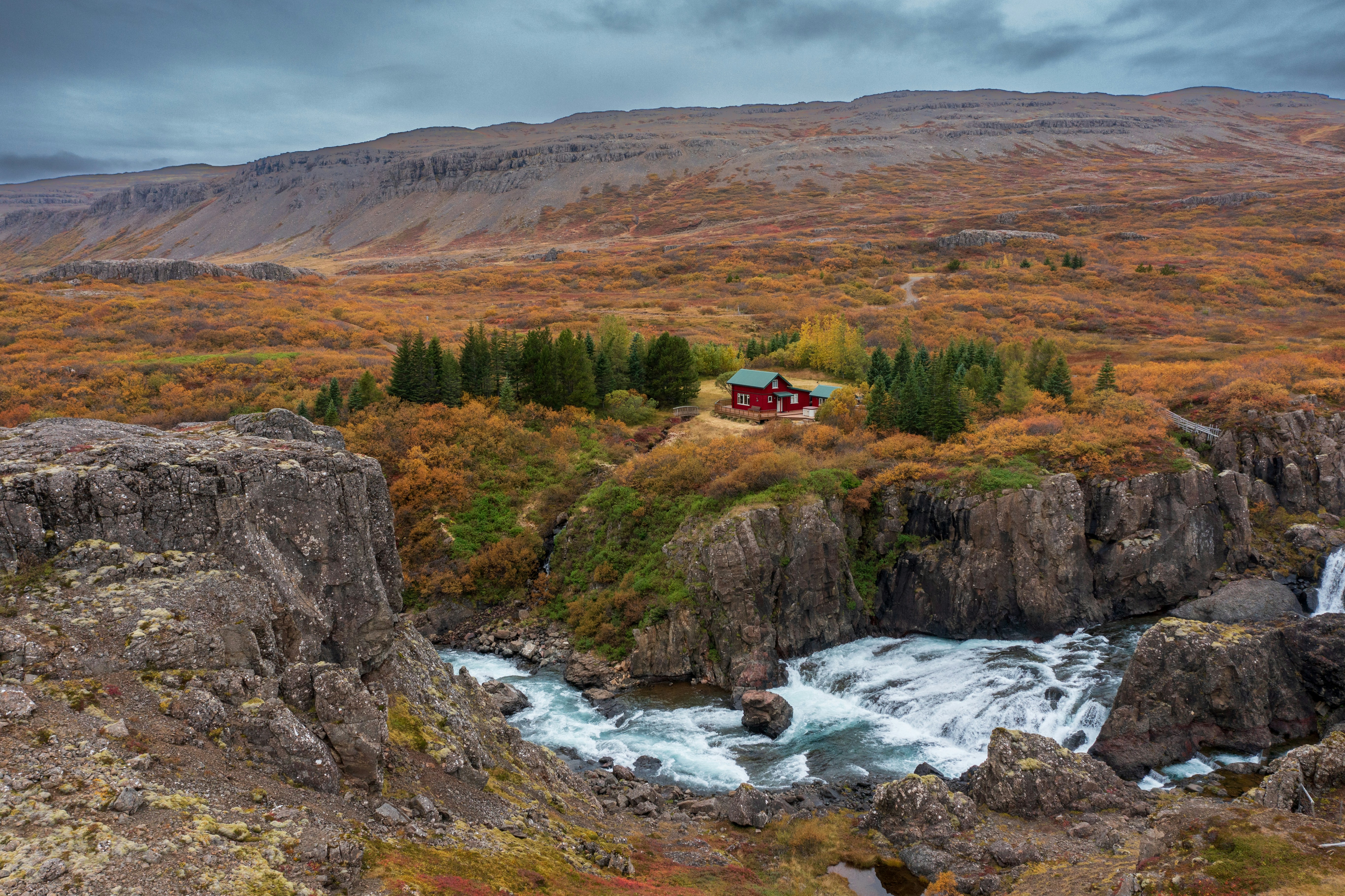
September still feels close to summer, with mild days, plenty of daylight and the first aurora nights. F-roads stay open through most of September before closing off. October is properly cool, the mountains get their first snow, and Northern Lights conditions are at their best. Pack layers and a real waterproof — autumn weather changes fast.
Is Iceland Worth Visiting in Autumn?
Yes, if you want the Northern Lights without full winter driving, fewer crowds at the famous sights, lower prices than July, brief but stunning autumn colours, easier photography light, and a genuinely local feel with sheep round-ups and harvest energy in the countryside.
Probably not, if you specifically want the midnight sun, guaranteed sunny weather, puffins (they leave in mid-August), full highland access all trip, or ice caves — those need summer or deep winter. Compare with the summer guide and the winter guide if you are still choosing.
The Northern Lights Return
From late May through early August the sky is simply too bright for aurora — even on strong nights, you cannot see them. That changes fast in mid-to-late August, when real darkness returns to the northern sky for the first time in months. By early September there is a proper dark window between roughly 10pm and 5am. By late September you get real night from around 9pm.
This makes September and October arguably the best months of the year for chasing Northern Lights, for two reasons most guides miss. First, the weather in autumn is often clearer than in December and January — cloud cover ruins more aurora nights than low geomagnetic activity does. Second, driving conditions are still forgiving. In October you are not fighting ice on the road at 2am on the way back from a viewing spot.
Check the aurora forecast on vedur.is the same evening you plan to go, look at the cloud-cover map, and drive to wherever the sky is clearest. Even a Kp 2 with a clear sky beats a Kp 5 under cloud. For a full breakdown see the Northern Lights guide and the photography tips.
Fall Colours in Iceland
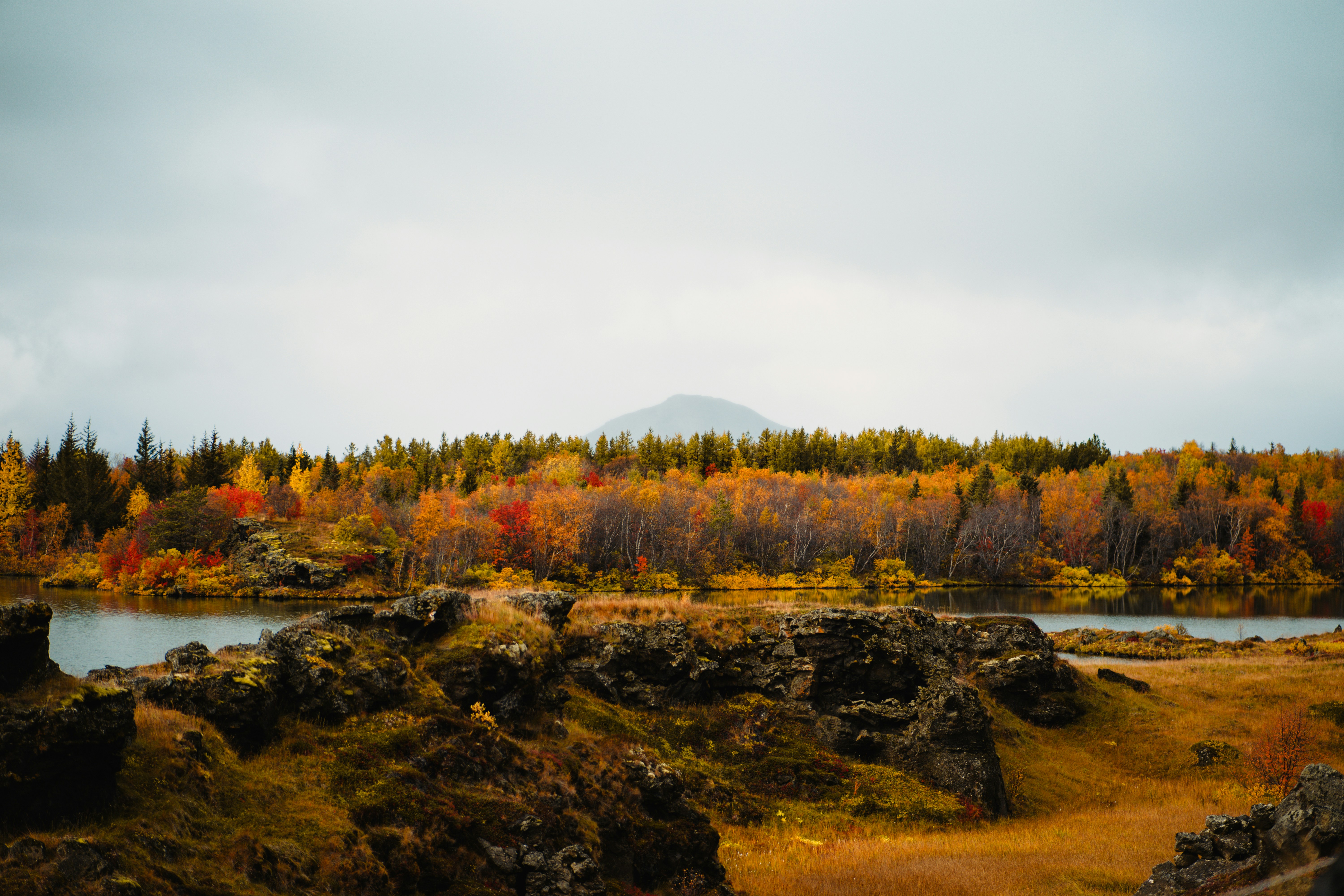
Iceland does not have the maple-forest autumn of New England or Japan. There is very little forest at all. But what it does have is birch, willow, blueberry, crowberry and dwarf shrubs, and when those turn in late September the ground itself changes colour. The moss-covered lava fields, the birch groves at Þingvellir, the slopes above Akureyri and the countryside of Þórsmörk all go through a short, intense period of yellow, orange, rust and deep red.
The peak is roughly the last week of September and the first days of October, and it lasts perhaps ten days before the first serious wind takes the leaves off. If you happen to be here in that window, drive somewhere with birch — the areas around Akureyri, Þingvellir, Hallormsstaðaskógur in the east, and Ásbyrgi in the north are especially good.
Réttir — The Sheep Round-Up
If you want a single experience that no summer visitor ever sees, this is it. Every autumn, Icelandic sheep that have roamed free in the mountains all summer are gathered back down. Farmers, families, neighbours and often visiting relatives ride out for days on horseback and foot to bring them in. Then the sheep are herded into a circular sorting pen called a rétt, and each owner picks their own out by ear-marks.
It is loud, dusty, joyful and completely genuine — this is not a tourist show. Most réttir happen on weekends between mid-September and early October, all around the country. Visitors are welcome to watch, and it is fine to lend a hand if you are asked. Afterwards there is usually coffee, cake and often live accordion music.
The best way to find one is to ask locally the week you arrive — every rural community has its own. The bændasamtökin (farmers' association) publishes rough dates each year, and search terms like réttir 2026 dagsetningar will surface local calendars. Dress warmly, wear boots that can handle mud and sheep dung, and do not stand between a sheep and where it is being sent.
F-Roads Are Closing — Last Highland Window
The highland interior — Landmannalaugar, Þórsmörk, Askja, Kerlingarfjöll, and every route across via Kjölur or Sprengisandur — is only open a few months a year. Autumn is when that window shuts. Exact closing dates vary with weather, but as a rough guide most F-roads start closing from around 15 September and the majority are shut by early October. Once a serious autumn storm dumps snow on the mountains, the roads that were still open close quickly.
If highland access is on your list, September is realistically your last chance. Check road.is for live open/closed status before setting out — a route open on Monday can be closed by Wednesday. And keep in mind river crossings are lower in early autumn than in July, but the water is significantly colder. For rules, insurance reality and mistakes to avoid, see the F-roads guide.
Weather and Daylight — The Big Shift From Summer
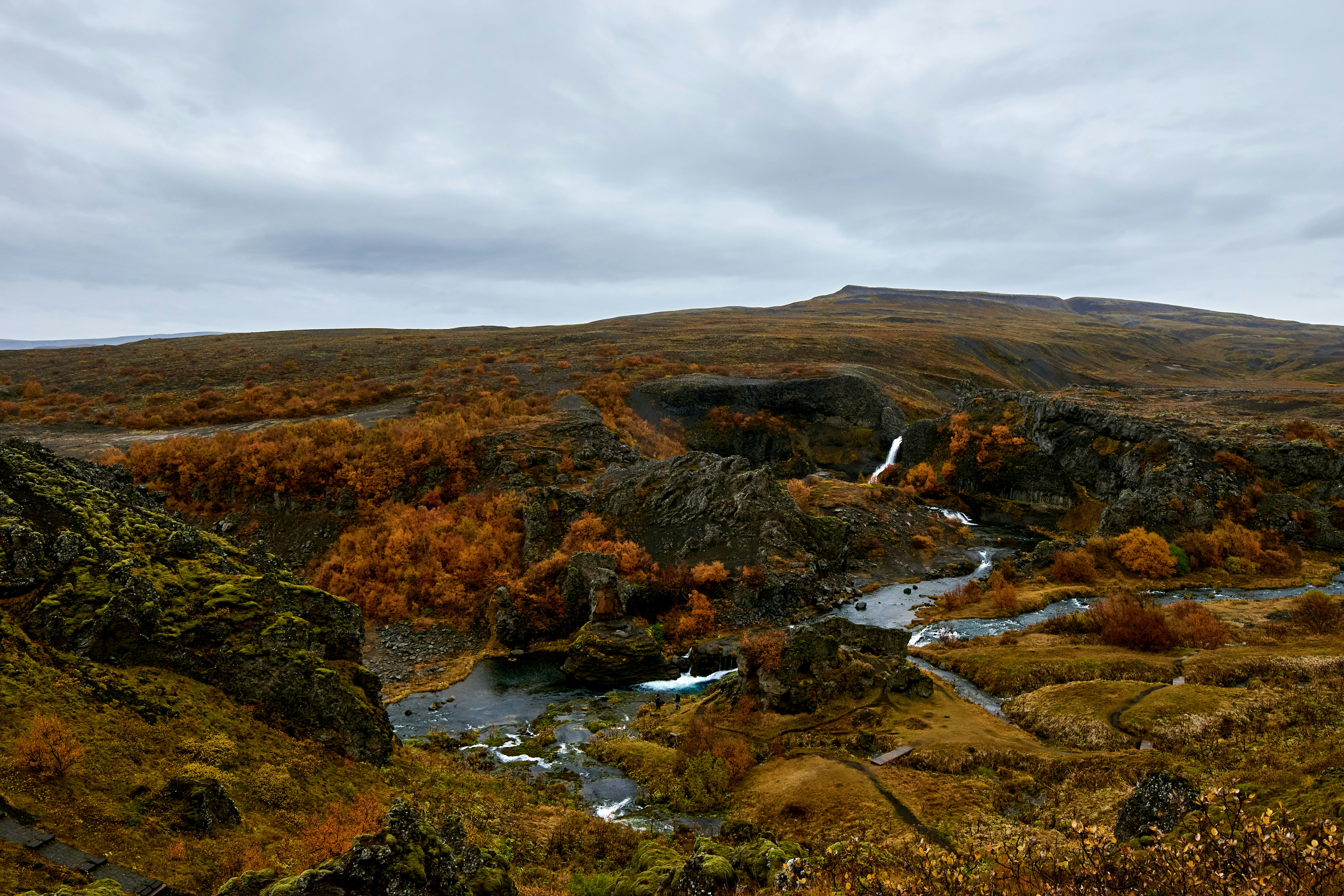
Autumn is the season where Icelandic weather shows its true personality. September is often surprisingly mild — 8–12°C days, wind, showers, occasional patches of proper sun. But it is also the season when the first big low-pressure systems roll in off the Atlantic. A calm morning can turn into 25 m/s wind by evening, with horizontal rain and closed roads. Learn to check the forecast every morning, not just before you leave.
Daylight shortens fast. On 1 September you still get around 14 hours of daylight; by 1 October you are down to around 11; by 1 November you have about 8. This matters for planning — a Ring Road day that was easy in July, with a leisurely stop at Jökulsárlón in the evening, is a different drive when the sun sets at 6.30pm and you still have three hours to Höfn.
Autumn Festivals Worth Catching
Autumn is quietly festival-heavy in Reykjavík. RIFF (Reykjavík International Film Festival) runs for about ten days in late September and early October, with screenings across several small cinemas — a great low-key evening if the weather turns bad. Iceland Airwaves, the country's biggest music festival, is in early November — technically not autumn anymore for most locals, but if you plan a shoulder-season trip around the first week of November you can catch it and still have decent Northern Lights conditions.
Smaller ones worth knowing about: Réttadagar (round-up days) in rural areas, autumn food and beer festivals in Reykjavík, and one-off harvest events at farms in the north and south. If you are staying somewhere rural, ask your host — smaller autumn events are almost never advertised online in English.
What to Pack for Autumn
The single most useful item is a proper waterproof shell with a hood. Iceland's autumn rain is not heavy, but it is horizontal and constant, and a hood matters more than a hat. Underneath, pack layers you can add and remove — a merino or synthetic base layer, a fleece or light down, and the shell on top. For October, add a warm hat, gloves and a buff or scarf.
Footwear should be waterproof — trainers are a mistake outside Reykjavík in autumn. If you plan to hike or attend a rétt, proper walking boots. Swimwear stays in the bag: local pools and hot springs are open every day of the year and are one of the great pleasures of an autumn Iceland trip. For the full list see the Iceland packing list.
An eye mask is useless in autumn — you will have real darkness. But a proper head-torch or small hand torch is genuinely useful, especially if you drive to a dark spot for Northern Lights and need to see what you are doing at the car. Phone torches drain the battery you need for the aurora forecast.
Crowds and Prices — Shoulder Season Economics
Autumn is real shoulder season. Compared with July and early August, you will see fewer people at Geysir, Gullfoss and Seljalandsfoss. Popular walks in Þórsmörk and Landmannalaugar are quiet by late September. Reykjavík's restaurants are easier to book. Guesthouses and hotels drop from peak rates, and rental cars often ease off too — not to winter lows, but noticeably below July.
The main exception is Northern Lights season overlap in late September and October, when aurora-focused travellers push demand back up on well-known guesthouses in the countryside. Book the specific dates you want, but you no longer need to book everything three months out the way you do for July.
Autumn Safety Notes
Autumn kills more tourists on Icelandic roads than any of the postcard seasons, and the reason is complacency. The road looks summery, the car looks the same, but the first storms are stronger, the light is lower, wet leaves and gravel are slippery, and sheep are being moved. Slow down. Check road.is and vedur.is every morning without exception.
Sneaker waves at Reynisfjara and other south-coast beaches do not care what season it is — respect the warning signs year-round. In the highlands and on any hike above 500m, the first snow can come in mid-September without warning. Carry a warm layer even on a walk that looks short. See the common driving mistakes guide for the full list.
Rural roads in September and early October are livelier than usual because of round-ups. You may round a corner and find fifty sheep on the road, or a farmer moving a herd across at slow speed. Stop, wait, don't honk. It is worth the two minutes to watch — this is the countryside doing what it has done for a thousand years.
The Bottom Line
Autumn in Iceland is underrated. You give up the midnight sun and the puffins, and you accept a chance of losing a day or two to weather. In exchange you get the Northern Lights back, fewer people at the sights, lower prices than peak, a brief bright week of autumn colour, the last window on the highlands, and a real chance to see a rétt — a piece of the country most visitors never even hear about.
If your trip is flexible and you can pick a season, mid-September to mid-October is the sweet spot: aurora conditions, still some F-road access, mild-enough weather, and everything still open. Book your accommodation, watch the forecast, and pack for anything.